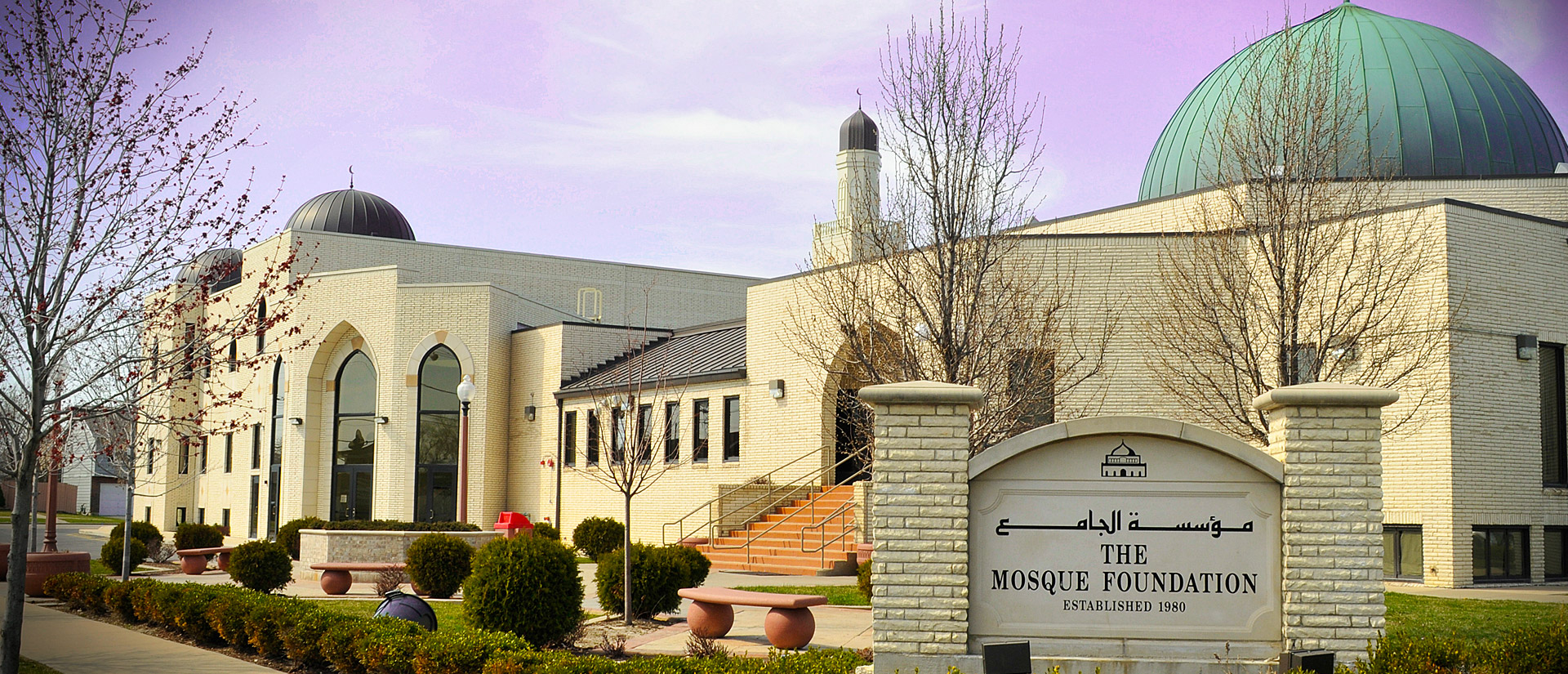
Mosque Foundation | Bridgeview, Illinois Logo
Mosque Foundation | Bridgeview, Illinois

Mosque Foundation

La Defensa Mas grandiosa La Defensa Divina

First Friday Prayer is at 12:30pm. Second Friday Prayer is at 2:00pm.

La Defensa Mas grandiosa La Defensa Divina

Alabado Sea Allah, El Grandioso, El Protector de Sus Siervos, El Unico capable de proveer seguridad a Su creacion.

Si retrocedemos a 1438 anos atras, nos encontramos con el comienzo de una etapa muy importante para la historia del Islam. Allah (SWAT) le ordena al el profeta Mohammad (saws)a  emigrar de Mecca hacia Medina cual es conocido como  Hijrah; y es cuando comienza el calendario islamico. Hijrah fue la luz de esperanza en los corazones de los primeros musulmanes(raa) quienes pusieron un gran ejemplo para todos los musulmanes, en cada generacion para copiar o emular. Allah (SWAT) dice en el Sagrado Coran (9:20) Los creyentes que emigraron, contribuyeron por la causa de Allah con sus bienes y combatieron tienen un grado muy elevado para  Allah, y son estos los que triunfaran. El profeta Mohammad (saws), asi como tambien todos los musulmanes,enfrentaron tribulaciones ,sufrimientos ,tiempos dificiles durante su estancia en Mecca. El (saws) mantuvo su calma y fue paciente con todas las dificultades que tuvo; el confiaba plenamente en la ayuda de Allah(SWAT).El Hijrah dio la seguridad a todo fiel creyente que por medio de la perseverancia hay esperanza al final.Al llegar a Medina los Ansar(ayudantes) cuales vivian en Medina dieron la bienvenida a los Muhajireen (los emigrantes) que venian de Mecca. La hermandad se desarrollo asi como tambien las Leyes Divinas fueron establecidas en la tierra. Esto trajo la justicia y paz en la region por un periodo largo. Este evento marco el comienzo de una era cual liberaba a la humanidad y a los verdaderos creyentes de las injusticias, inigualdad, y racismo, cuales ellos experimentaron en Mecca y en otras partes del mundo en aquel tiempo. Allah (SWAT) ayudo a los creyentes y los guio hacia un futuro estable, prosperoso y seguro.

Como el Hijra se relaciona con cada uno de nosotros? Para mi en particular es una inspiracion que me ayuda, y me da fortaleza cuando ocurre discriminacion e injusticia hacia mi y  mis hermanos de fe. Es cuando me arecuerdo de todas las dificultades que experimentaron El profeta (saws) y los primeros musulmanes, y como Allah (SWAT) los defendio, los protejio y triufaron al final. Me hace regresar a mi Creador constantemente y suplicar por Su Ayuda. Debemos de confiar en la proteccion Divina,pues solo Allah (SWAT) es nuestro mejor Defensor, es quien controlara toda situacion y todas estas pruebas no son eternas. No tengamos miedo pues Allah (SWAT) esta con los creyentes.

  Oh Allah, danos la  fortaleza , aumenta nuestra fe, ayudanos, proveenos con paciencia, guianos con la mejor decision para poder enfrentar todas las pruebas y desafios  en nuestras vidas , Amen.

Su hermana en Islam,

Celia Snowber

El Hajj

El Hajj, Peregrinaje a la Casa Sagrada


Dhul Hijja es uno de los cuatro meses sagrados. En este mes los musulmanes cuales Allah le ha otorgado la bendicion de visitar Su Casa Sagrada,” La Kaba” en Mecca,  se preparan para realizar los rituales de la peregrinacion.Tuve la dicha de hacer una entrevista con una persona que tuvo la bendicion de peregrinar a la Casa Sagrada en Mecca. Su nombre es Ermelinda Isa, tiene 73 anos mashaAllah, nacio en Brasil y tuvo la oportunidad de hacer el Hajj dos veces. Le pregunte, Que fue lo que la motivo hacer el Hajj y estas son sus palabras. ” En el ano 1997, tuve el privilegio  de hacer el Hajj. Queria hacer el Hajj pues es una obligacion si tienes los medios para hacerlo. Tambien para sentirme consagrada que fui a la Casa de Allah”. Cual fue su impresion al ver la Casa Sagrada por primera vez?,”Me emocione mucho y senti como un miedo porque mire tanta gente diferente y no conocia a nadie ,entonces hice una suplica a Allah y ni bien levante mi rostro mi amiga Jenine estaba frente a mi. Yo llore de emocion porque Allah me contesto mi suplica ahi, terminando de hacer mi suplica.Tambien me impresione mucho al ver enormes saltamontes verdes con dos ojos que parecian esmeralda. Tuve mucho cuidado de no lastimarlos o matarlos porque en el Hajj no se puede matar tan siquiera una mosca “. Como se sintio, experimento algo asombroso?, “Al estar en Mina, experimente un miedo al ver el tamano de una de las tantas montanas, tan enorme y ver el tamano de las personas que parecian como hormiguitas caminando al lado de la montana”. “Otra de las tantas experiencias durante mi Hajj fue cuando caminaba en Medina , cerca de el cementerio donde estan enterrados los companeros de el profeta (saws) senti un escalofrio y todos los pelos de mi cuerpo se erizaron, hasta el momento cada vez que me acuerdo de esa experiencia en el Hajj me ocurre lo mismo.” Que consejo le daria a otros creyentes sobre el Hajj? ,” Si tienen los medios para hacer el Hajj , haganlo! ” Yo le suplico a  Allah(SWAT), O Allah, Tu eres el Mas Misericordioso ten misericordia  de los musulmanes que quieren hacer el Hajj pero no pueden y dales la oportunidad que puedan hacerlo” Amen

InshaAllah la experiencia compartida por la hermana de fe, Ermelinda Isa nos de animo para hacer el Hajj.

Su hermana en Islam,

Celia Snowber


Las virtudes de recordar a El Creador


Las virtudes de recordar a El Creador


Queridos hermanos de fe, les quiero preguntar, Haz tenido hoy la oportunidad de recordar a tu Creador? Todas las bendiciones que estas teniendo desde el momento que abristes tus ojos al amanecer, te recordaste de alabar, de exaltar, de agradecer a tu Creador? Allah (SWAT)ha dicho: Recordadme pues, que Yo os recordare, agradecedme{Mis mercedes} y no seais ingratos.( Sura2:152) Veemos que esta simple accion que hacemos es una caracteristica de ser agradecidos al Creador , El que nos provee todo.

El profeta(saws)dijo:”La semejanza entre quien recuerda a Allah y quien no lo recuerda, es como el vivo y el muerto.” Y dijo(saws) ” Acaso no les he informado sobre la mejor de las obras, la mas pura ante vuestro Senor, la que los elevara en grados y es mejor que la distribucion del oro y el dinero, y es mejor que pelear contra el enemigo. Ellos (sus companeros) dijeron: Si informanos! Les dijo(saws): El recuerdo de Allah (SWAT).En una Hadiz Qudsi, Allah (SWAT) dijo: “Yo Soy como mi siervo me considera y estoy con el cuando me recuerda, asi, si me recuerda en si mismo, Yo lo recuerdo en Mi Mismo, y si me recuerda en una reunion, Yo lo recuerdo en una reunion mas grande y mejor, si el se acerca a mi un palmo,Yo me acerco a el un codo y si el se acerca a mi un codo, Yo me acerco a el un brazo, y si el se dirige hacia a mi caminando, Yo me dirijo a El rapidamente. “(Bukhari, Muslim)

Relato Abdullah Ibn Busri(raa) que un hombre dijo: ! Oh Mensajero de Allah!, ciertamente las obligaciones del Islam se me han vuelto demasiadas, asi que informame de algo para que me aferre a ello.Dijo: “No dejes que tu lengua cese de recordar a Allah.”(Tirmidhi)

Como siervos de Allah (SWAT) debemos de desarrollar este habito de usar nuestra lengua para decir palabras buenas. Aqui comparto algunas de estas palabras; Subhana Allah(Gloria a Allah), Allahu Akbar (Allah es el mas grande), Al hamdulilah(la alabanza a Allah), La ilaha ila Allah(no hay dios sino Allah)La Haula wala Quwatta illa bilah( No hay fuerza o poder excepto en Allah)Subhana lahi wabihamdihi(Gloria sea para Allah y comienzo con Su alabanza)

Allah les tiene reservado Su perdon y una gran recompensa a los musulmanes y las musulmanas, a los creyentes y las creyentes, a los piadosos y las piadosas, a los justos y las justas, a los pacientes y las pacientes, a los humildes y las humildes, a aquellos y aquellas que hacen caridades, a los ayunadores y las ayunadoras, a los pudorosos y las pudorosas, y a aquellos y aquellas que  recuerdan frequentemente a  Allah.(Sura 33:35)

Comencemos a recordarnos y a utilisar  todas estas bellas palabras que son unicamente, exclusivamente dichas para Nuestro Creador, Allah Exaltado sea. Asi podremos mejorar nuestra conneccion con Allah (SWAT) obteniendo esta virtud, recibiendo Su perdon y Su recompensa. Allah (SWAT) nos facilite nuestra lengua para Su recordamiento, Amen

Su hermana en Islam,

Celia Snowber

Porque Me Converti Al Islam

Porque Me Converti Al Islam


Si tu Senor hubiera querido, todos los habitantes de la Tierra habrian creido.Tu no podras hacer que los hombres crean aunque se lo impongas.Solo creeran quienes Allah haya decretado que asi lo hagan;y dejara en el extravio a quienes no recapacitan{en Sus signos}. Diles:Reflexionad en todo cuanto hay en los cielos y en la Tierra: pero que para quienes Allah decreto la incredulidad no se beneficiaran de los signos ni de los Mensajeros.(10:99-101)

Mi nombre es Esperanza Hernandez tengo 91 anos y soy originaria de la Ciudad de Mexico, he vivido en los Estados unidos por mas de cuarenta anos. Yo conoci del Islam a traves de mi hija, la escuchaba hablar sobre el Islam con mi esposo quien tambien se convirtio, y me gustaba mucho porque me di cuenta que solo se adora a Dios y eso fue lo que me atrajo mucho, conoci otras religiones pensaba que eran buenas porque glorificaban a Dios, pero lo que no me gustaba eran algunos de los rituales que hacian…y como pedian donaciones para la iglesia! lo hacian de una manera muy exigente y no era lo que la persona pudiera donar si no que exigian mucho mas de lo que tuvieran, y eso no me gustaba. En todas las veces que he ido a la mezquita no he visto nada similar. Lo que mas me ha gustado del Islam es la adoracion pura a Un solo Dios, por eso es que decidi aceptar el Islam, me siento muy bien, siento tranquilidad y mucha paz interior, me gusta mucho y quisiera que todos mis hijos siguiera esta hermosa religion. Pero yo se que solo Allah puede guiarlos. Todas las noches leo mi Coran  una o dos paginas, no entiendo mucho pero le  suplico mucho a Allah que me de entendimiento y tambien a cada momento pido mucho a Allah que guie a mis hijos hacia el Islam y que me los cuide mucho.

Mi nombre es Sabrina tengo 24 anos y soy musulmana. Mi acercamiento con el Islam comenzo por mi curiosidad por saber un poco mas sobre la religion de algunas personas que habia conocido durante mi estancia en los Estados Unidos. Asi fue como comence a buscar maneras de acercarme al Islam intentando entrar a una mezquita y buscando la manera de conseguir un Coran para leer. El Islam cambio mi vida ya que desde la primera vez que entre a la mezquita y conforme fui leyendo el Coran sentia una conexion inexplicable con Dios cual no habia logrado sentir antes. Con ello quede completamente convencida de que esta era la religion en la cual pertenecia y el ultimo mensaje de Dios.

Alabado Sea Allah que con Su Misericordia infinita ha guiado a el camino recto y ha bendecido a estas hermanas con Su religion Al-Islam, Alhamdulillah! De la oscuridad les ha brindado luz para que asi puedan ver con certeza la verdad. Que tan maravilloso regalo de haber sido elegidos yguiados por Nuestro Gran Creador.Le suplico a Allah que nos mantenga firme en nuestra fe,Amen.

Su hermana en Islam, Celia Snowber


La Fe del creyente hacia su Creador

Fe es la firme creeencia y completa acceptacion verdadera de todo lo que Allah (SWAT) y Su Profeta (saws) nos ha ordenado a tener fe; sometiendonos por dentro y por fuera. Es la creencia de el corazon cual incluye las acciones del corazon y el cuerpo, donde se establece la religion entera.

Allah (SWAT) menciona en el capitulo 9: 71-72: Los Creyentes y las creyentes son aliados unos de otros, ordenan el bien y prohiben el mal, cumplen con la oracion prescrita, pagan el zakat y obedecen a Allah y a Su Mensajero. Allah tendra misericordia de ellos; y El es Allah,Poderoso, Sabio. Allah prometio a los creyentes y las creyentes{que obtendran por su fe} jardines en el Paraiso por donde corren los rios, en los que disfrutaran eternamente, y hermosas moradas en los jardines del Eden, y sabed que alcanzar la complacencia de Allah es aun superior. Este es el exito grandioso. La recompensa del creyente por tener una completa fe, lo lleva a adquirir una estacion alta en este mundo y un nivel superior y distinguido en la Otra Vida. Como sabemos si somos de esta categoria? En el capitulo 8:2-4; Allah (SWAT) dice: Ciertamente los creyentes cuando les es mencionado el nombre de Allah sus corazones se extremecen, y cuando les son leidos Sus preceptos reflexionan acrecentandoseles la fe, y siempre se encomiendan a su Senor. Estos son quienes realizan la oracion y dan en caridad parte de lo que les hemos proveido.Estos son los verdaderos creyentes que alcanzaran grados elevados{acorde a sus obras} ante su Senor, el perdon {de sus pecados} y una recompensa generosa{el Paraiso}.  Otros capitulos con mas de la descripcion del creyente son; 23:1-11, 10:62-63,49:7-8

El profeta(saws) dijo, ” Hay tres cualidades, aquel quien las tiene saborea la dulsura de la fe: Allah y Su Mensajero son mas queridos que cualquier otro; que ama a otra persona por la causa de Allah; que le disgusta dejar la religion de la misma manera que no le guste ser arrojado al Infierno.”(Bukhari, Muslim) Esta hadiz nos demuestra que el amor debe ser sincero hacia Allah(SWAT) puro sin metas mundanales o egocentricas. Si conocemos que por la fe el creyente puede lograr un rango alto en esta vida y la Otra, entonces, Como desarrollamos esa fe?

Allah Exaltado Sea ha colocado una ruta que encamina a adquirir la Fe cual es el mas grandioso e importante objetivo. Allah(SWAT)nos ha dado metodos para fortaleser y promover la fe,estas son; Cuando contemplamos las evidencias de Allah recitadas en el Coran y la Sunnah. Cuando adquirimos  conocimiento de los Bellos y Perfectos Nombres de Allah. Cuando contemplamos el Sagrado Coran. Al contemplar la creacion, cuando queremos aprender la verdad y realisar el porque fuimos creados, y finalmente hacer las acciones basandonos con esta verdad. La firme fe del creyente es una gran fortalesa que ayuda al creyente a acercarse mas a su Creador.

 !Senor nuestro!No hagas que nuestros corazones se desvien, despues de habernos guiado. Concedenos Tu misericordia, Tu eres el Dadivoso. (3:8)

Su hermana en Islam, Celia Snowber

La Excelencia de hacer suplicas usando Los Bellos Nombres De Allah

En el Nombre de Allah,El Misericordioso, El Compasivo; Allah, Glorificado y Exaltado Sea, dice: A Allah pertenecen los Nombres[y atributos] mas sublimes, invocadle pues con ellos.(7:180) En este verso podemos darnos cuenta como podemos suplicar a nuestro Creador en la manera apropiada. Un punto importante de mencionar es que debemos de ser sinceros de corazon, cuando hacemos suplicas y de entender; saber el significado de los Nombres de Allah. De esta forma realizamos cuan Supremo es Allah y cuanta humildad se requiere de nosotros como sus siervos.Allah (SWAT) nos dice en el capitulo 20,verso14:Ciertamente Yo soy Allah, y no hay mas divinidad que Yo. Adoradme,pues,y haz la oracion para tenerme presente en tu corazon.

Aqui comparto algunos versos del Sagrado Coran, cuales nos ensenan como los profetas (Que la paz y bendicion de Allah sea para ellos) hacian suplicas hacia nuestro Creador. El profeta Adan(AS)dijo:!Senor nuestro! hemos sido injustos con nosotros mismos, si no nos perdonas y tienes misericordia nos contaremos entre los perdedores.(7:23) El profeta Job (AS)dijo:!Oh, Allah! Tu bien sabes que he sido probado a traves de las enfermedades, y Tu eres el mas Misericordioso. (21:83) El profeta Jetro dijo: !Oh, Senor nuestro! juzga entre nosotros y los incredulos de nuestro pueblo; Tu eres el mejor de los jueces.(7:89) El profeta Jose (AS) dijo: !Oh, Senor!Tu me has concedido el poder, y me has ensenado la interpretacion de los suenos. !Creador de los cielos y la Tierra! Tu eres mi Protector en esta vida y en la otra, hazme morir sometido a Ti, y reuneme en la otra vida con los justos.(12:101) El profeta Jonas (AS)No hay otra divinidad mas que Tu. !Glorificado seas! Ciertamente he sido un inicuo.(21:87)El profeta Lot(AS)dijo: !Senor mio!Salvame de este pueblo corrupto.(29:30) El profeta Moises(AS)dijo:!Senor mio!He sido injusto conmigo mismo; perdoname. Y Allah le perdono, porque ciertamente El es Absolvedor, Misericordioso.(28:16) (28:24)(20:25-28) El profeta Abraham(AS)dijo:!Oh Senor nuestro!A Ti nos encomendamos, a Ti pedimos perdon y ante Ti compareceremos. !Oh Senor nuestro! No permitas que los incredulos nos venzan. Perdonanos !Oh Senor nuestro!,Tu eres Poderoso, Sabio.(60:4-5)(26:83-89)En una hadiz narrada por Umm Salamah (raa) dijo la suplica mas dicha por el profeta Mohammad (saws)era; “Oh Controlador de los corazones, haz mi corazon firme en Tu religion(At-Tirmithi)Los mas Bellos Nombres pertenecen a Allah, asi que llama a Allah con Sus Nombres. Las Suplicas son la llave de Misericordia,es por eso que es bueno comenzar las acciones con suplicas. Si encuentras placer en recibir una respuesta de Allah en tiempos de dificultad y angustias, debes de hacer mas suplicas cuando los tiempos son faciles.Despues, debes invocar las bendiciones al profeta Mohammad(saws), y hacer tu suplica;pues Allah (SWAT) hara por el siervo sus asuntos mundanos y los de su vida por venir.

Toda la alabanza le pertenece a Allah(SWAT) que nos ha ensenado como acercarnos y conectarnos con El(SWAT)sea por la oracion, por recordarnos, alabarlo y suplicarle por Su ayuda. Aprendamos los Nombres de Allah y sus significados y podremos hacer las suplicas como se merece nuestro Creador.

Su hermana en Islam, Celia Snowber

From Arabic into Latin

SH.ARAFAT

From Arabic into Latin

How the Muslim Civilization Shaped the Renaissance

In his speech on “Islam and the West” at Oxford University in 1993, Prince Charles observes: “If there is much misunderstanding in the West about the nature of Islam, there is also much ignorance about the debt our own culture and civilization owe to the Islamic world. It is a failure, which stems, I think, from the straight-jacket of history, which we have inherited. The medieval Islamic world, from central Asia to the shores of the Atlantic, was a world where scholars and men of learning flourished. But because we have tended to see Islam as the enemy of the West, as an alien culture, society, and system of belief, we have tended to ignore or erase its great relevance to our own history.”  

This statement does not come as a surprise to me as I met Prince Charles in Al-Azhar Mosque in 2006 and got to know that his promotion of understanding, tolerance and respect is based on knowledge and courage, the absence of which gives rise to fear and intolerance. Indeed, possessing negative preconceptions about Islam is a failure to recognize the significance of Muslim contributions to the development of modern civilization. Montgomery Watt similarly asserted: “For our cultural indebtedness to Islam, however, we Europeans have a blind spot. We sometimes belittle the extent and importance of Islamic influence in our heritage and sometimes overlook it altogether… To try to cover it over and deny it is a mark of false pride.”[1]


Furthermore, Watt observes, “when one keeps hold of all the facts of the medieval confrontation of Christianity and Islam, it is clear that the influence of Islam on western Christendom is greater than is usually realized. Not merely did Islam share with Western Europe many material products and technical discoveries; not merely did it stimulate Europe intellectually in the fields of science and philosophy; but it provoked Europe into forming a new image of itself. Because Europe was reacting against Islam it belittled the influence of Saracens [a medieval European reference to Muslims] and exaggerated its dependence on its Greek and Roman heritage. So today an important task for us is to correct this false emphasis and to acknowledge fully our debt to the Arab and Islamic world.” [2]

Those familiar with Muslim medieval heritage understand what Watt asserts is not an exaggeration. This brief article seeks to illustrate the genius of the Muslim and Arabic civilization and how its contributions inspired the European renaissance. I will rely purposefully on western references to illustrate the intellectual role of Muslim civilization and its impact on Europe according to the west. My goal is fourfold: (1) to challenge the current negative portrayal of Muslims, (2) to exemplify the real practice of Islam leads to the rise of civilization, (3) to support our Muslim youth to gain confidence in their own heritage and to be able to actively participate in the making of modern civilization with the full realization that knowledge, science and education are not foreign to, but cherished hallmarks of their Islamic heritage and identity, and (4) to serve as an eye-opener for everyone to explore the legacy of the civilization of Islam on their own, simply because this topic is usually covered in encyclopedias! One may start by exploring the books referenced in this article.

To start, we all know that Hippocrates is the Greek father of medicine and the great ‘Western’ physician. We also know that Roland of Parma published his Surgery with numerous detailed illustrations. Do you know how the Italian artist portrayed the ‘Western’ physician? “In Arab dress, with a turban.”[3]
Second, you might know that Aristotle is referred to as the First Teacher? Guess who was the Second Teacher? Al-Farabi!

These facts should not come as a surprise since, besides Baghdad, medieval Spain, especially Sicily and Toledo, was a world center of learning created by Muslims. E.J. Holymard observes that “[D]uring the twelfth and thirteenth centuries there was a scientific renaissance in Europe, and scholars from Christian countries journeyed to Muslim universities in Spain, Egypt, Syria and even Morocco in order to acquire knowledge from their foes in religion but friends in learning. Arabic science soon began to filter through, and by the middle of the thirteenth century the trickle had become a river.”[4]
    

To get a sense of the influential presence of Muslim scholars in medieval and early Renaissance, just have a look at this alphabetical list of Latinized names of Muslim philosophers and, for details, explore their legacies on your own if you wish: Abalphatus Asphahanensis (mathematician, 10th century), Abenguefith (physician, d. 1074), Abubacer or Abentophal (philosopher and physician, d. 1185), Abulfeda (historian d. 1331), Albategnius (astronomer and mathematician, d. 929), Alboacen (jurist, d. 1058),Albohali (astronomer/astrologer, d. 835), Albucasis (physician and surgeon, d. 1013), Albumasar (astronomer/astrologer, d. 886), Alchabitius (astrologer, d. 967), Alfarabius (philosopher, d. 950),Alfraganus (astronomer, d. 880), Algazel (theologian and mystic, d. 1111), Alghorismus (mathematician, d. 850), Algizar (physician, d. 980), Alhazen (father of optics, d. 1040), Alkindus (polymath, d. 873), Ametus filius Iosephi (mathematician, d. 912), Anaritius (mathematician, 10th century), Alpetragius (astronomer, d. 1204), Arzachel (astronomer, d. 1087), Avempace (scientist and philosopher, d. 1138), Averroes (famed physician, philosopher and polymath, d. 1198), Avenzoar (physician, d. 1161),Avicenna (physician and philosopher, d. 1037), Azophi (astronomer, d. 986), Dreses (geographer, d. 1165), Geber (father of chemistry, d. 815),  Haly Heben Rodan (physician and astronomer, d.1061), Haly Abnenragel (astronomer and mathematician, d. after 1041), Machometus Bagdedinus (mathematician, d. 1037), Omar Tiberiadis, Rhazes (physician and philosopher, d. 925), Sorsanus (physician, d. 1037), Thebith (astronomer and mathematician, d. 901), and Trium fratum (three scholars active in mechanics, geometry and engineering, 9th century).[5]

Their Arabic names respectfully are Abu al-Fath al-Isfahani, Ibn Wafid, Ibn Tufayl, Abu al-Fida’, al-Battani, al-Mawardi, Abu Ali al-Khayyat, Abu al-Qasim al-Zahrawi, Abu al-Ma’shar al-Falaki, al-Qabisi, al-Farabi, Abu al-‘Abbas al-Farghani, Abu Hamid al-Ghazali, al Khawarizmi, Ibn al-Jazzar, al-Hasan Ibn al-Haytham, al-Kindi, Ahmed Ibn Yusuf al-Misri, al-Nayrizi, al-Bitruji, al-Zarqali, Ibn Bajja, Ibn Rushd, Ibn Zuhr, Ibn Sina, Abu al-Husayn al-Sufi, al-Idrisi, Jabir ibn Hayyan, Ali ibn Rudwan al-Misri, Ali ibn al-Rijal, Muhammad al-Baghdadi, Umar al-Tabari, Abu Bakr al-Razi, al-Juzani, Thabit ibn Qurra, and the Banu Musa Brothers.  

How was this scientific Renaissance born in the Muslim world and how was it transferred to Western Europe? Well, it all started with medieval Baghdad. In Baghdad emerged Bayt al-Hikmah (The House of Wisdom)[6]
, founded by the Abbasid caliph Harun al-Rashid (d. 809), which flourished during the reign of his son al-Ma’mun (d. 833). In The House of Wisdom, a Translation Movement was sponsored and funded by the Abbasid caliphs. This resulted in the translation of countless books on philosophy and science from Greek and other languages into Arabic, which by then was the official language of knowledge and business in the Muslim world.

The productions of The House of Wisdom advanced Muslim thought and academia as Muslim scholars adopted, modified, criticized or expanded the Greek ideas. By the middle of the ninth century, the House of Wisdom had the largest selection of books in the world. It took Western Europe a thousand years to hear about Greek heritage and reach the level of philosophical inquiries and scientific experimentation achieved in the Muslim world! This knowledge and spirit was transferred to Muslim Spain where Muslims, Jews and Christians worked on exploring the Greek tradition and the issue of reason and revelation.

arfat

Mapping of the Transfer of Knowledge to Europe

            With the fall of Granada in 1492, and after a short period of tolerance, there was a long history of forced conversion among Muslims and Jews, leading to the horrible crimes of The Inquisition and finally the complete expulsion of Muslims and Jews from Spain. Meanwhile, Arabic was outlawed as spoken language and Arabic books were ordered to be burnt except for philosophical and scientific manuscripts. Such is the case of Cardinal Cisneros who ordered the burning of all Arabic books except a few hundred books on philosophy and medicine that he sent to his college at Alcala.[7]

Christians would then inherit Greek and Arabic traditions and start the ‘second’ Translation Movement that eventually led to the transforming of Western thought and scholarship. Translation centers were mainly in Toledo, Sicily and France.[8]
Gerald, who would later be Pope Sylvester, attributed “Europe’s progressiveness to a large extent in a wise gathering of the fruits of Muslim culture.”[9] For instance, some of Nicholas Copernicus’ ideas could be traced back to people like Ibn al-Shatir and Tusi as discussed in the works of George Saliba and F. Jamil Ragep. Major translated books included Al-Farabi’s Classification of the Sciences, Avicenna’s Canon of Medicine, The Cure and Metaphysics, Ibn Tufayl’s philosophical tale Hayy Ibn Yaqzan, Averroes’ medical work on al-Kulliyyat (Generalities) and Great and Middle Commentaries on Aristotle, Abu Ma’shar’s Introduction to Astrology, Alhazen’s Optics, Abu Bakr al-Razi medical work Al-Hawi, al-Ghazali’s Aims of the Philosophers and Incoherence of the Philosophers, and Ibn Waḥshīyah’s Al-filāḥah al-nabaṭīyah (Nabataean Agriculture) …etc.[10] Charles Burnett listed 131 textual items translated into Latin. Many of these Muslim works were the standard textbooks in European universities for centuries.

Finally, in the words of Maria Rosa Menocal: “Not just Córdoba shone … but the whole of Al-Andalus over which its caliph presided. In the end, it would be Al-Andalus’ vast intellectual wealth, inseparable from its prosperity in the material realm, that made it the ‘ornament of the world.”[11]


[1] Montgomery Watt, The Influence of Islam on Medieval Europe, Islamic Surveys, 1972; p. 2

[2] Ibid., p. 84

[3] Mark Graham, How Islam Created The Modern World, amana publications, 2006; p. 61

[4] Russel R, The Works of Geber: A New Edition with Introduction by E.J. Holymard, 1928; xv

[5] This list along with the authors’ major works translated into Latin can be found at http://www.muslimheritage.com/article/latinized-names-muslim-scholars

[6] For details, see The House of Wisdom by Jonathan Lyons and The House of Wisdom by Jim Al-Khalili

[7]See Haig A Bosmajian, Burning Books, p. 64.

[8]See George Saliba, Rethinking the Roots of Modern Science: Arabic Scientific Manuscripts in European Libraries.

[9]See Sarton II, p. 279, quoted in Ghazanfar’s CIVILIZATIONAL CONNECTIONS: EARLY ISLAM AND LATIN-EUROPEAN RENAISSANCE.

[10]For a good study of the translators from Arabic into Latin, see Charles Burnett’s Arabic into Latin in the Middle Ages: The Translators and Their Intellectual and Social Context.

[11]Maria Rosa Menocal, The Ornament of the World: How Muslims, Jews and Christians Created a Culture of Tolerance in Medieval Spain

By Sh. Ahmed Arafat

A Life of Trivialities

ShJamal 2014  A Life of Trivialities

Brothers and Sisters,

Allah (SWT) states, “Know that the life of this world is but a play, a passing delight, a beautiful show, a cause of boasting among you and quest for more riches and children. It is like the rain that causes the plants to grow, and this gives delight to the sowers. Then it withers, and you can see it turn yellow, and in the end is crumbles into dust. In the life to come there is terrible suffering, as well as Allah’s forgiveness and His goodly acceptance. The life of this world is no more than an illusionary pleasure.” (Al-Hadid:20)


اعلموا أنما الحياة الدنيا لعب ولهو وزينة وتفاخر بينكم وتكاثر في الأموال والأولاد كمثل غيث أعجب الكفار نباته ثم يهيج فتراه مصفرا ثم يكونا حطاما وفي الآخرة عذاب شديد ومغفرة من الله ورضوان وما الحياة الدنيا إلا متاع الغرور


In this verse of Surat Al-Hadid, two images are painted for us: one of this life, and one of the life to come. 

The first life consists of humans chasing their wants and desires. Allah (SWT) describes them as playing, engrossing themselves in things which are not necessarily prohibited, but that are surely of no benefit. These timewasters include watching television shows or movies that may not contain questionable content, spending hours surfing the internet doing online shopping or reading random blogs, sitting wastefully in the mall or coffee shops, playing videogames, and watching sports games.

This entertainment-addiction develops into an obsession of appearances and boasting as Allah (SWT) mentions in the verse above. This is not limited to how one dresses or the latest gadgets they purchased. This speaks to the general tendency humans develop to value how others perceive them above all else. Every word they say and action they take are carefully compared to the standards and expectations set by others- others who have accomplished little to earn a position of authority in dictating what is right and wrong.

And so, they begin to compete with each other about trivial matters and the real competition for the akhira becomes limited to the seasons of Ramadan or Hajj or, unfortunately, the death of a family member. And even in those instances, humans find ways to compete and boast amongst themselves. Posting a picture with a person whom others perceive as a celebrity or posing in a remote location become admirable accomplishments. Spending hours on social media updating comments and photos take precedence over real life interactions and fulfilling the rights of other human beings.

Allah (SWT) compares this way of life, this chasing of desires, to a farmer waiting for a heavy rain. The farmer toils and tires over a small seed, planting it deep into the earth, hoping for a cloud to rain on it. He becomes anxious and enthusiastic that once the rain comes and the seed matures, he will harvest the most beautiful crop and experience utmost delight, just as a child feels when receiving a new toy. Yet, Allah (SWT) says that this farmer is not able to reap these crops, and they turn yellow before his eyes, and eventually crumble to dust. Similarly, the life of this world crumbles to an end. All things acquired and painstakingly accumulated become nothing at all. The pleasure gained in chasing after the dunya is short-lived and does not lead to happiness. Many humans have accumulated everything one could want from the comforts of this life yet cannot seem to find joy or happiness. Today, those who are perceived to be the elite of society continue to sit in hundreds of hours of therapy and consume tons of anti-depressants attempting to rid themselves of overwhelming feelings of sadness or apathy.

The image of the second life Allah (SWT) illustrates for us is an entirely different one. He (SWT) says, “…In the life to come there is terrible suffering, as well as Allah’s forgiveness and His goodly acceptance…”

This second life does not end, whither, nor crumble. It is one of reckoning, accountability, and eternal reward or intense punishment. The playing is over. The painted masks once worn to boast diminish and ugliness is exposed. The real homes are furnished and ready to welcome their eternal inhabitants.

In this verse Allah (SWT) does not direct us to ignore this life, on the contrary, we have a duty to build life on earth. But He (SWT) reminds us to rectify our values and standards and rise above our desires and wants. This type of faith is true and only it can bring about human contentment and happiness.

Ramadan is a time during the year Allah (SWT) has blessed us with to focus our lenses on what really matters. To calibrate our compasses and measure our actions according to the standards Allah (SWT) has provided for us.

May Allah (SWT) grant us an opportunity to fast the month of the Quran. May He (SWT) guide us to rectify our values and make us among those who strive for the life to come.

Sheikh Jamal M. Said

Principal Imam & Director

By the Witness and that which is Witnessed

Brothers and Sisters,

In times of calamity and great hardship, when Muslims are being slaughtered by the thousands and Islam is being attacked from old adversaries and new ones, we can find solace through turning to the book Allah (SWT) as our beloved Prophet Muhammad (S) and his righteous companions (R) did before us when they were persecuted relentlessly in Makkah, not by a foreign aggressor, but at the hands of their own family members, relatives, neighbors, and community and those who simply witnessed these persecutions doing little to stop them.

We are reminded of the story of a defenseless people who were burned to death, young and old, women and men, yet their lives never forgotten and brought to life each time Surat Al-Buruj is recited. The crime of these people was solely their belief in the oneness of their Creator and for it they were punished the most appalling of punishments. Ruthless rulers of their time dug a massive ditch and lit in it a great fire in which they threw all the believing men, women, their children and infants. Their burning was witnessed by masses of people who stood around the ditch simply watching the horrific scene much like the masses today watch as innocent families are completely annihilated.

The Surah opens with an oath, “By the heaven with its constellations, by the promised day, by the witness and that which is witnessed.” (85:1-3) Allah (SWT) calls our attention to very important matters: His vast creation, the Day of Accounting, and everyone and everything that shall be accounted on that Day. His oath (SWT) attests to the severity of the story which follows.

Allah (SWT) begins narrating the story by a declaration of anger with the oppressors, “Slain be the people of the pit.” (85: 4) Allah illustrates images of what they have contrived in the verses, “of the fire abounding in fuel, when they sat around it, watching what they did to the believers.” (85:5-7)

Allah (SWT) describes them sitting around the fire and enjoying themselves as they watched the horror unfold. This is tyranny at its core. Humans finding pleasure in harming other human beings as we have witnessed today in the cities of Syria, neighborhoods of Gaza, the prisons of Egypt and in Iraq and Burma.

What was their crime? What evil deed had they committed against those who murdered them? “They took vengeance on them for no reason other than they believed in Allah, the Almighty, to whom all praise is due.” (85-8)

They believed in Allah (SWT) who deserves to be worshipped. They rose above the ignorant masses to abandon falsehood and embrace truth as Muslims today look towards living a life of dignity over a life of oppression. They could have easily saved their lives by agreeing to the terms of their oppressors, but what worth would their lives have had they abandoned their faith? As their bodies burned, their souls elevated towards the constellations, towards their Creator where they could be harmed no longer by those who oppressed them and where they will be eternally rewarded.

And for their oppressors Allah warns, “Those who persecute the believers, men and women, and do not repent shall suffer the punishment of hell, and suffer the punishment of burning.” (85:10) The oppressors will burn in an eternal flame for the injustices they incurred where their flesh will be brought to life and burned an eternal number of times.

“But those who believe and do righteous deeds shall have gardens through which running waters flow; that is the supreme triumph.” (85:11) The story does not end in the burning pit, justice is restored and those who choose a life of dignity over a life of oppression will be rewarded eternally for elevating their souls over the worldly desires of their bodies.

May Allah (SWT) alleviate the suffering of the oppressed, may He (SWT) provide comfort to those who grieve, may He grant them peace in this life and His promised reward for patience in the hereafter.

Sheikh Jamal M. Said,

Principal Imam & Director


Keys to Enliven Your Salah, Part 6

SH.ARAFAT

Understanding Sujud (Prostration

To revive our prayer, we need to recognize the spiritual and moral implications of what we do and say during Salah. Failing to recognize the meaning of what we say and do will turn our Salah into a series of machine-like movements that do not lead to spiritual maturity or moral growth. In this part of the series, I will shed some light on the most significant movement in our prayer; that is, Sujud. The following are several moral and spiritual lessons, which should be gained from performing Sujud. During your prayer, focus on one of them and try to internalize it in your life.         

    1- Developing Humility

By putting our foreheads on the ground, we are reminded of the origin of our creation: clay. This position is sufficient for us to leave no room for arrogance in our hearts. By putting our forehead on the ground, we recognize our human weakness and admit Allah’s majesty. The more we recognize Allah’s greatness and our human weakness, the more we are rid ourselves of pride and self-centeredness. Accordingly, Sujud has a clear message for every Muslim: all people are equal in the sight of Allah, regardless of their color, race or language. On a related note, I once heard a Muslim preacher once say, “Look at your nose during your Sujud and you will learn true humbleness!”

          In actuality, learning humility through Sujud is more practical and effective than reading or listening to many lectures on the topic. Moreover, we are trained to practice humility thirty four times during the mandatory five daily prayers and as many as we can during voluntary prayers. This helps to explain why a practicing Muslim can never be a racist or an arrogant person; otherwise, his prayer will be a witness against him.

2- Renewing our Covenant of Obeying God

         Sujud represents an implicit commitment to obeying AllahU and a serious promise to stay away from the haram. So when make Sujud, we remember our sins and shortcomings and plead to renew our covenant of obeying AllahU. It is like saying, “Oh Allah, I am sorry for the sins I committed; so, forgive me.”That is why Sujud is often associated with crying in the Quran when speaking about the Sujud of the righteous servants of AllahU. For example, AllahU described the righteous when they hear the Quran as, “They fall down on their faces in tears,” (19: 58).

         Accordingly, we should perceive Sujud to be a means of “daily repentance”—something that really helps us to be protected against the Devil’s attempts to make us give up. In this way, Sujud helps us weaken the hold sins can have upon us. If a Muslim commits a sin after the dawn prayer, he has an appointment with AllahU at the noon prayer to wash away his sins and renew his covenant with his Lord. If the same person committed a sin after the noon prayer, he will get rid of it in the afternoon prayer and start a new relationship with AllahU and so on. Therefore, through Salah, AllahU gives us five main, obligatory chances to start a brand new life and follow His Way and avoid the paths of the Devil.

For this reason, Salah should be considered as the fountain of hope for everyone who tries sincerely to overcome Satan’s whispers and nurture his or her spirituality. The late sheikh Ash-Sha’rawi, once said, “Would you imagine that your car could break down if your mechanic checks it out five times a day? Most probably it will not, simply because if the mechanic noticed a problem, he would fix it right away. By the same token, a Muslim presents himself five times a day before AllahU to check the level of his Iman and character and to cleanse the dirt of sins.”

         Imam al-Bukhari and Imam Muslim reported, on the authority of Abu Hurayrah, that the Prophet (S) once asked his companions, “What do you think if one of you had a river running past his door and he bathed in it five times a day, would there be any trace of dirt left on him?” They replied, “No trace of dirt will remain on him.” Upon this the Prophet (S) replied, “This is the case of the five daily prayers, through which AllahU washes away our sins.”

3- Attaining Closeness to Allah

            How does Sujud make us closer to AllahU? There appears to be three main reasons. First, there are two things that typically move people away from AllahU: sin and pride. Pride is a barrier to surrendering to AllahU and sinning could lead to despair. We just learned how Sujud teaches us how to enhance both our sense of humility and repentance. Second, Sujud draws us near to Allah, because through it we express our ultimate surrender to Allah and declare our absolute humility. Third, in Sujud we express our need of AllahU. When you feel weak and needy, you will be closer to AllahU, simply because at moments of need and hard times you can easily recognize Allah’s sovereignty and greatness and your inability and weakness. Which is why Prophet Muhammad (S) taught us about the types of people that AllahU answers their prayers: the fasting person, who usually feels hungry and thirsty; the patient person, who usually feels feeble and weak; the oppressed person, who usually finds hope in none but AllahU; and the traveler, who usually experiences tiredness and fatigue.

            Not only is the supremacy of AllahU clearly acknowledged through the physical act of Sujud but also through a verbal act. In each Sujud, we must say: “سبحان ربي الأعلى” “Holy be my Lord, the Highest.” It is best to repeat this statement slowly and thoughtfully, with frequent periods of silence, allowing the meaning to sink in and take hold in our hearts.

          It is because Sujud marks a moment of feeling very close to Allah, the Prophet (S) recommended making more du’as during Sujud. The Prophet (S) teaches, “Nothing brings a servant closer to Allah than Sujud; so, offer more du’as.” When you consider Salah to be an opportunity for true repentance and a means of getting close to Allah, you will not abandon offering du’aas due to some sins you know you committed. Imam Sufyan al-Thawri said, “Do not let what you know of your sins keep you away from saying du’as since AllahU answered the prayer of the Devil, the worst of all creations, when the latter said, “My Lord, grant me respite till the day when they will be raised up. He [Allah] said: ‘You are granted respite till the appointed Day.” Moreover, the Quran tells us that AllahU answered the polytheists’ prayer: “And when they sail in a ship they purely pray to Allah alone [to save them]. However, when He brings them safe to land, they quickly commit Shirk [ascribing partners with Allah],” (29: 65).

          It is of relevance to mention here some of the du’as the Prophet (S) taught us to say during Sujud, اللهم اغفر لي ذنبي كله دقه وجله وأوله وآخره وعلانيته وسره “  which means, “My Lord, forgive me all my sins: small and great, first and last, apparent and hidden.” Another du’a the Prophet (S) used to say is

” اللهم لك سجدت ، وبك آمنت ، ولك أسلمت ، سجد وجهي للذي خلقه وصوره ، وشق سمعه وبصره ، تبارك الله أحسن الخالقين “ which means, “My Lord, before You I prostrate, in You I believe and to You I submit. My face prostrated before the One Who created and fashioned it, made its hearing and sight. Blessed be Allah, the best of creators.”

4- Trusting Allah in Hard Times

          Since genuine Sujud reflects our faith in Allah’s right to be worshipped and trusted, Salah can be a good means for alleviating our pains, removing our worries and developing our trust in AllahU and His decrees. For righteous people, Salah was always a true refuge from all the trials and problems of their daily life. To face a polytheist’s mockery and persecutions, Muhammad (S) was instructed in the Quran, “Nay, never obey him. Prostrate and get closer.” (96: 19) In another instance, the Quran comforts the Prophet, “We do indeed know how thy heart is distressed at what they say. But celebrate the praises of thy Lord, and be of those who prostrate themselves in adoration,” (15: 97). That is why it is reported that whenever the Prophet (S) faced a difficult time, he would rush to Salah and say, “Give us comfort through prayer, Bilal.”

5- Harmony between Muslims and the Whole Universe

        One of the greatest teachings of the Islamic Faith is embodied in the word Islam itself which is derived from the root SLM which means “surrender” and “peace.” The Quran teaches that all righteous people and prophets were Muslims in the sense that they totally submitted their will to the One same God: AllahU. Moreover, the Quran teaches that the whole universe submits to AllahU and follows His commands. In the Quran, we find countless verses which speak about the universe’s submission and Sujud, such as,“Have you not seen that before God prostrate whosoever is in the heavens and whosoever is on the earth, and the sun, and the moon, and the stars, and the hills, and the trees, and the beasts, and many of mankind…?” (22: 18)It is only humans who were given free will to obey AllahU or disobey Him bearing the consequences for their decisions. However, when humans submit to AllahU, they become in harmony with the universe in its entirety. A true Muslim does not feel alone when he worships AllahU, even if all people abandoned him; he actually aligns himself with the entire universe which is worshipping the true GodU.

By Sh. Ahmed Arafat 

Keys to Enliven Your Salah, Part 4

SH.ARAFAT

Creating a Quiet Environment 

As I was visiting a patient in hospital, the afternoon prayer was due. Praying close to one of the corners of the room, I was interrupted by a nurse giving her instructions to the patient in a fairly loud voice. Noticing that I was praying, she regretfully kept apologizing and kindly lowered her voice to the minimum till I was done with my prayer.

Being considerate is a great value; so, I appreciated her behavior. However, I realized that it is obvious that a meaningful, effective prayer requires a quiet environment which is essential for Khushu’ or mindfulness. As Imam al-Ghazali puts it in his Ihyaa: “no one has ever claimed that Salah is God’s test for our tongues!” Salah is more about Hudhur al-Qalb (lit. the Presence of the Heart) or the mindfulness that enables the heart to react with what we say and do throughout the whole prayer.

Here are some keys for creating a culture of Khushu’ and quietness:

1- Start at Home.

Before you start your prayer, make sure that you turn off your TV and mobile phones. If you have children, explain to them that Salah is a time for quietness and peace. It is really unfortunate that many of us unconsciously teach our children that concentration or mindfulness is not needed during our prayers. If you doubt this, try to answer the following questions: Have you ever prayed while the TV was on? Has your spouse ever prayed while you were talking to someone at home or over the phone? Has your child ever prayed in the midst of noise without any attempt from you to kindly address this problem?

The fact is tolerating noise during Salah at home gives our children the impression that Salah does not require concentration. They may even think that it is just “machine-like movements”! Why? Because the spirit of Salah is missing; therefore, they will judge only the outward. The problem really gets worse when our children come to the mosque and receive a confirmation that quietness is not necessary for Salah! Yes, as they start praying their Sunnah or making up the parts they missed in Jama’ah (congregation or group prayer), they hear a lot of noise around them. They also see adults talking out loud next to other adults during their prayers. They see Arabic-speaking audience praying Sunnah while the Imam is giving the post-prayer Khatirah (short talk) in English. If you were in their place, what impression would you get?

2- Ensure Quietness in the Masjid.

I have to start admitting that during the regular Jama’ah prayer, there is remarkable quietness and peace in the Masjid. This is great, indeed. Yet, as the Jama’ah is over, people praying their Sunnah or making up the missed parts of their Salah feel easily distracted by the out loud exchange of greetings, if not stories. I understand the importance of greeting people and the pressure of socializing with others; yet, these good things should not be done at the expense of others’ prayers.  

 It is enough to remember that the prophet r spoke against reading the Quran out loud, let alone personal conversations, next to a person praying. In his Sunan, Imam Abu Dawud recorded that Abu Sa’id t reported that, as the prophet r heard his companions raising their voices in their Quranic recitations during his I’tikaf, he addressed them: “Each one of you is having Munajah (intimate conversation) with his Lord; so, do not harm or disturb each other and do not raise your voices over each other during your Quranic recitations or Salah.”

3) Be consistent in your request for quietness.

Practically show that you care about quietness at home and in the Masjid whether you or others are praying. It is ironic when some adults in the Masjid get annoyed when a child cries or when a phone rings (even though these incidents could happen for a valid excuse such as emergencies or total forgetfulness); yet, they do not feel guilty when they disturb others during their Salah through unnecessary loud talks!    

4) Kindly address those people talking next a person praying.

 With a smile and whisper, remind the disturbing person that someone is praying next to him. If someone wanted to talk to you, kindly point to him or her to talk where people are not praying. If your wife is praying at home and the kids are making noise, kindly whisper to them to stay quiet for few minutes till the prayer is over. In this way, we can create a culture of Khushu’ and a new generation that will turn our mosques and homes into places of prayer, peace and healing.

By Sh. Ahmed Arafat 

Keys to Enliven Your Salah, Part Three

SH.ARAFAT

Observing how Muslims offer their Salah, one can easily notice that they correctly stand, bow, prostrate and sit. However, some may miss an essential part of prayer, without which Salah is not valid; that is, “Tuma’neenah.”

What is “Tuma’neenah”? It basically means praying so calmly that you do not connect two movements together and that you do have enough time to recite the required words of praise. As a criterion for Tuma’neenah, scholars say “you do not move from one posture to another until the bones are settled.” A common mistake that illustrates the absence of Tuma’neenah, and thereby the invalidity of Salah, is making “half rising from the bowing position” or “half rising from the prostrating position.” You must make a complete standing after bowing and complete sitting after prostrating.

Imam al-Bukhari and Muslim reported, on the authority of Abu Hurayrah t, that the Messenger of Allah rentered the mosque and a man came in and prayed. Then the man greeted the Messenger of Allah r. The Messenger of Allah rgreeted him back and said: “Go back and pray, for you have not prayed.” The man went back and prayed as he had prayed before, then he came to the Prophet rand greeted him, and the Messenger of Allah rgreeted him back and said: “Go back and pray, for you have not prayed.” When he had done that three times, the man said: “By the One Who sent you with the truth, I cannot do more than that; so, teach me. The prophet rsaid: “When you go to pray, say Allahu Akbar, then recite whatever you can of the Quran. Then bow until you have Tuma’neenah in bowing, then rise until you stand up with Tuma’neenah. Then prostrate until you have Tuma’neenah in prostration. Then sit up until you have Tuma’neenah in sitting. Then do that throughout the entire prayer.” Note that this Hadith placed emphasis on Tuma’neenah (not all Salah requirements) since the prophet r was dealing mainly with what the man missed.

Hasty performance of Salah never brings in concentration or mindfulness. The prophet rcompared praying hurriedly to “stealing”! He says: “The worst thief is the one who steals from his own prayer.People asked, ‘Messenger of Allah, how could one steal from his own prayer?’ He said:By not completing its bowing and prostrating [positions]” [Reported by Imam Ahmad and others].

Spiritually speaking, maintaining a good pace between Salah actions is a necessary step in meditating on what we recite and allowing time for the values contained in the recitations to sink in and take hold. Practicing Tuma’neenah in Salah both physically and verbally will result in what we call the Tuma’neenah of the heart where feelings of peace and tranquility are inspired as the Quran says: “In the remembrance of Allah do hearts find rest” (13:28).

Practically, if you are not used to practice Tuma’neenah in your prayer, it may be hard for you to maintain it in the beginning; yet, you really need to keep trying and slow down till Tuma’neenah becomes a second nature to them. This is part of what Imam al-Ghazali would call “mujahadah” or self-struggle. If you feel you need to finish your prayer quickly, force yourself to slow down till you master Tuma’neenah. The Quran promises: “[As for] those who strive for Our cause, We will surely guide them unto Our ways, and Allah is surely with those who do good” (29:69).

By Sh. Ahmed Arafat