Mosque Foundation | Bridgeview, Illinois Logo
Mosque Foundation | Bridgeview, Illinois

Mosque Foundation

Keys to Enliven Your Salah, Part 1

First Friday Prayer is at 12:30pm. Second Friday Prayer is at 2:00pm.

Keys to Enliven Your Salah, Part 1

Have you ever felt that your performance in salah is reduced to mumbled words? Or that mindfulness and connectedness were absent during your prayer? Well, you are not alone! Many people express the same concerns and desire to experience more meaningfulness during salah to support spiritual growth. This article aims to illustrate different ways, or keys, to rescue and revitalize your salah.

The first key is to approach salah as a form of Munajah, or an intimate conversation with Allah ﷻ. Missing the sense of Munajah will cause your performance in salah to be automatic, machine-like movements. The following are examples drawn from the Sunnah which illustrate the power of Munajah in the salah of Prophet Muhammad ﷺ:

  • After the first Takbirah, Prophet Muhammad ﷺ started with “Dua’a al-‘Istiftah” or opening prayer. There is a variety of opening ‘ad’iyah Prophet Muhammad ﷺ was reported to have used. Here are some examples:

“I turn my face in complete devotion to the One Who is the Originator of the heaven and the earth, and I am not of the polytheists. Verily my prayer, my sacrifice, my living, and my dying are for Allah, the Lord of the worlds; There is no partner with Him, and this is what I have been commanded (to profess and believe), and I am of the believers” (Muslim).

“Glory be to you, O Allah and all praises are due unto You, and blessed is Your name and high is Your majesty and none is worthy of worship but you” (Al-Tirmidhi).

“O Allah, put a great distance between me and my sins, as great as the distance You have made between the East and the West. O Allah, cleanse me of sin as a white garment is cleansed from filth. O Allah, wash away my sins with snow and water and hail” (Bukhari & Muslim).

  • Besides saying “Subhana Rabbiya al-‘Atheem” during ruku’ (the bowing position), Prophet Muhammad ﷺ would add:

“O Allah, to You I have bowed, in You I believe, to You I have submitted, and in You I put my trust. You are my Lord. My hearing, my sight, my blood, my flesh, my bones, and ligaments are humbled before Allah, the Lord of the Worlds” (Muslim).

  • Rising from ruku’, Prophet Muhammad ﷺ would add:

“Our Lord, praise is Yours, abundant, good and blessed praise, fills the heavens and the earth and what lies between them, and whatever else You please. (You Allah) are most worthy of praise and majesty, and what the slave has said – we are all Your slaves. O Allah, there is none who can withhold what You give, and none may give what You have withheld. And the might of the mighty person cannot benefit him against You” (Muslim).

  • In addition to “Subhana Rabbiya al-A’la” during his sujud (prostrating position), Prophet Muhammad ﷺ would add:

“O Allah, to You I have prostrated, and in You, I have believed, and to You, I have submitted, and You are my Lord. My face has prostrated to the One Who created it, formed it and brought forth its hearing and sight. Blessed be Allah the best of Creators” (Muslim).

  • Between each sajdah, Prophet Muhammad ﷺ would say:

“O Allah, forgive me, have mercy on me, guide me, heal me, and provide for me.” Or “My Lord, forgive me,” twice (Abu Dawud).

May Allah ﷻ accept our worship and guide us always on the right path.

By Sh. Ahmed Arafat

Ramadan to Ramadan Under COVID-19: Why Support YOUR Masjid?

Despite the challenges of the past year, your involvement, dua, and support of the Mosque Foundation continue to propel it as a leading Muslim organization addressing the diverse community’s spiritual, religious, and communal obligations.

In 2020, although our doors temporarily closed, our services never stopped. As soon as it was safe, we re-opened our doors to welcome the community while keeping the cleanliness and preservation of our Masjid a top priority. Your generous support maintains the Masjid, Community Center, Al-Siddiq School, Zakat assistance programs and expand endowment properties and improvement projects.

Although we could not open our doors for typical Masjid events, 2020 kept us busy as we successfully transitioned into your homes through our online platforms streaming various educational programs for the youth, families, and adults. On YouTube, 441 videos were uploaded with over 100,000 views and over 1,000 new subscribers. On Facebook, our post reach was 2,060,000, with an additional 6,000 new followers. On Instagram, our post reach was 255,000, with over 500 new subscribers. We also launched an updated Mosque Foundation app with state-of-the-art features. Finally, our newsletter launched over 100 campaigns to 8,400 subscribers to keep the community up to date and informed. 

We are blessed with multiple Imams, dedicated staff, and volunteers who have the knowledge and expertise necessary to serve our community. In addition to religious services, thousands of individuals and families received:

  • Marriage support and counseling 
  • Islamic arbitration and mediation services 
  • Parental & youth counseling
  • Other consultations (by phone, email)

Another essential service the Mosque Foundation continued to carry out is funerals with religious rights performed under supervision from our Imams, with extra precautions to keep our team and community members safe during the Janazah (funeral) process.

The Community Food Pantry saw a dramatic increase in families needing support during these difficult times. To keep up with demand, we have purchased a new, more spacious location to keep serving our neighbors in need while maintaining the dignity of families and the safety of our volunteers.

As for civic and social outreach, we deployed dozens of staff members and volunteers to help our community be represented by completing the Census. As a result, we reached over 11,000 members of our community to participate. Additionally, we continued to educate and encourage members to register and vote during the national and local elections. We also hosted a candidate forum in the Masjid parking lot to inform community members on critical issues. Thousands of masks were donated to our community members and to local front-line healthcare workers to help them perform their duties safely. Finally, we held a rally with prominent leaders in support of Black lives. 

Regarding Zakat & charitable programs of 2020, 713 checks were issued to local families and individuals in need for a total of $147,000. Since 2010, we have raised $21 million for local and international nonprofit organizations in Ramadan alone. This Ramadan, nearly one million dollars was raised. 

We pray to Allah ﷻ to keep us attached to our Masjid and keep our doors open to continue serving our community for generations to come.  


Mosque App

Did you Download/Update our FREE mobile app

The Mosque Foundation is to Download/Update our NEW app  to stay updated. Download the app Today

Apple store ➡️ CLICK HERE 
Google play ➡️ CLICK HERE 

Support the Purchase of  a New Food Pantry Building

Give a Sadaqah Jariyah

At the Mosque Foundation, part of our mission is to address the needs of every component of an American Muslim’s life. This includes taking a proactive, comprehensive approach to community service. For over 20 years, the Mosque Foundation Community Food Pantry has been offering sustenance to lines of people, regardless of their race, ethnicity, place of residence, or religious background.

Since the pandemic hit, the pantry went from serving around 150 families a week, up to 500! Our current storefront pantry cannot handle the service requests. The long line of clients waiting outside is improper and demeaning, and the neighboring businesses constantly complain. For these reasons, we have taken the initiative to purchase a new building that can accommodate the increased demand in a safe and welcoming environment for volunteers and clients. 

The Mosque Foundation Community Food Pantry takes pride in the fact that no one is ever turned away. Whether you are an individual who recently lost your job and need something to eat for the day, a single parent trying to make ends meet, elderly grandparents with custody of grandchildren, a new immigrant or refugee who needs help adjusting to the unfamiliar country and customs, or a widow—when you come into the Mosque Foundation Food Pantry, you can rest assured that you will receive the highest quality of food available with a welcoming smile. We are all in this together.

We call on your generosity to help us purchase a new facility, renovate it, and open it up for service. It is located at 9851 S 76th Ave, in Bridgeview. At 22,080 square feet, the new property is spacious enough to accommodate handling large quantities of food with enough room for our volunteers to serve the surge of beneficiaries more efficiently. The total cost is estimated to top $300,000.

This project is Zakat and Sadaqah-eligible. We encourage you to take advantage of this unique opportunity to fulfill the teachings of Prophet Muhammad ﷺ, who said: 

أيها الناس: أفشوا السلام، وأطعموا الطعام، وصلوا الأرحام، وصلوا بالليل والناس نيام؛ تدخلوا الجنة بسلام

O, people! Spread (the greeting of) Salam, feed others, uphold the ties of kinship, and pray during the night when people are sleeping, and you will enter Paradise with Salam.”

Gain the reward of Sadaqah Jariyah and nourish your neighbors with the Food Pantry expansion project. 

Donate now: bit.ly/MFPantry.

For more information, contact us at (708) 433-5666.

The Sun Will Shine Again

“The sun will shine again, and the grass will grow back. Give it time.”

In life, it is sometimes challenging to keep our faith and trust in Allah strong. We go through hardships that seem to come at the worst possible time as we perceive. We seem to go across barrier after barrier after barrier as we try to walk the righteous path. Things happen to us in our lives that we can’t seem to make heads or tails of. Tragedies and pain, discomfort and stress, and rarely, as human beings with such shortsightedness and emotion clouding our perception, can we understand even partially why. To see the silver lining as it were around all of those dark clouds is next to impossible, especially when we are in the heat of the moment.

For a person to overcome, they cannot focus only on the present and forget the past and ignore the possible future. The human being by nature is like an animal reactive only to the present, reactive only to what is happening in front of him right now in this very moment. The disbeliever in Allah, the one without hope in Allah, without fear and optimism and gratitude, judges his or her life solely on the present time in which they live. Things are going how I want them to go now; therefore, things are good and always good. Things are not favorable now; therefore, life is terrible and will always be henceforth likewise. This is Human beings’ state in their most primitive form, as Allah tells us in the Quran. This foul nature of the human bound by this flesh, that which means: “… Indeed, if we give humans a taste of mercy from Us (i.e., health, wealth, children, or anything a person finds dear and invaluable) and then pry it away from them, they are found to be very hopeless and ungrateful”  (Quran 11:9).

In this verse, Allah tells us about the human being’s natural cynicism regarding Allah and the world and selfishness for that matter. Allah says that the human being reacts to loss with hopelessness, meaning the human being judges the future based on present pain. Hopeless, the sun will never shine again, the clouds will never part again, and the rain will never let up again, even though everything around us screams to the contrary.

Allah says that which means:

“It is Allah who sends the winds, and they stir the clouds and spread in the sky however He wills, and He makes them fragments so you see the rain emerge from within them. And when He causes it to fall upon whom He wills of His servants, immediately they rejoice. Although they were, before it was sent down upon them – before that, in despair. Hence, observe the effects of the mercy of Allah – how He gives life to the earth after its lifelessness. Indeed, that [same one] will give life to the dead, and He is over all things competent” (Quran 30:48-50).

This kind of optimism is what logicians refer to as an inductive argument. In other words, if Allah has consistently raised the sun every morning, eventually, no matter how dark or long the night is, I will then have unwavering hope and optimism that the sun will rise again, and the clouds will part again. The proverbial dreary rain will eventually stop. All we must keep is a little patience and faith. We’ll pull through this one just like we did the previous because it is Allah who has had my back this whole time. He did not bring me this far just to let me down and leave me to the wolves.

This optimism is also a trademark of Prophet Muhammad ﷺ. Look at the wording of the great Messenger of the children of Israel, Musa and compare that to the statement of our great Messenger. When Musa was at the edge of the sea, nowhere left to go, and the Pharaoh and his were in hot pursuit, the followers of Musa lost faith quick, forgot the past, and misjudged the future, saying, “Indeed we have surely been subdued!” Musa replied in the singular, saying to them: “To the contrary! My Lord is with me, and He WILL guide me through this!” To this statement, Allah parted the sea itself and caused it to change its very nature for His servant Mosses! (Quran 26: 61-68)

Compare that to the statement of our Messenger ﷺ when he and his companion were exiled in the cave, deemed fugitives to Quraish. Abu Bakr said that the men in our pursuit were so close, and we were so obviously apparent that if one of them had looked to his feet, he would have spotted us! To which the Prophet ﷺ replied as Allah quoted: “Do not grieve; indeed Allah is with us”  (Quran 9:40).

Notice the use of pronouns here: Musa said his Lord was with ‘him,’ and our Messenger said with ‘us’! This wording is indicative of the attitude of the rest of the nation of these two great men. Our nation is not fooled by what we see in the immediate, no matter how easy it feels to give up and give in. This is what makes a true Muslim and follower of the Prophet ﷺ. What separates the lions from the men is that the lion does not give in and unravel, even when he would be excused for doing so.

Allah knows best.

By Sh. Ali Mashhour

Start With What Allah Started With


We may become a little lost during our lives. Our sins accumulate into mountains, and our hearts become filled with impurities. We begin to stroll on the path. We stumble, get distracted, and sometimes peek our heads over the limits of the course of Allah. We first venture into the grey areas and then into clearly forbidden territories. 

The Prophet ﷺ warned us of this in a compelling narration collected by Imam An’Nasaa’i in which he mentions that Islam is like a long path to Allah with walls lining both sides. In these walls, there are open doors draped with curtains. These walls represent the boundaries of Allah, and the doors are the prohibitions of Allah through which a person transgresses these boundaries. At the entrance of this path is the Quran.

Along the path, there is a warner that reminds us all to stay steady upon this path. Each time a person stops and is distracted by one of these draped doors, the warner calls out: “Do not peek through that curtain, for if you do, you will end up walking through the door!” He mentions that this warner is the conscience in the heart of every believer. Satan seeks to silence and mute that warner. He tries to train us to ignore just this once, just for today, just for this one thing or this one time. We continue to ignore our conscience day in and day out, a little here and a little there, and before we know it, we have accumulated mountains of confusion and sin. 

When we catch ourselves and wake from our slumber, we realize that we have strayed from the path. We’ve lost our way and are in a panic to find our way back. With what should we start? How do we find our way back? How do we prioritize getting our feet on the path of Allah? These questions bring to mind a narration of the Prophet ﷺ collected by Imam Muslim in which he announced to the people with him in hajj: “Start with what Allah started with!” This is the key, to find your way back and begin the healing and cleansing process. We must start with what Allah started within the Quran. When we open the first page, we find a chapter worded as a prayer: “Guide us to the straight path, the path of those whom your grace is upon and not the path of those who have incurred your anger nor the path of those who have gone astray.” So the first thing is to have an honest, open heart and pray for guidance with conviction and sincerity. 

Then we move on to the beginning verses of the very next chapter in which Allah says: “This is the Book and revelation from Allah which contains no doubt; it is guidance for the God-fearing.”  We understand that the first step which takes you on to the path of Allah and is the direction of Allah is the Quran as understood by the Prophet ﷺ and his companions. We hold to it and hang onto every word and letter, allowing its light to penetrate to the core of our hearts. As the Prophet ﷺ says: “The book of Allah is the rope of Allah which extends from heaven to earth.” But the Quran and Sunnah cannot be approached in just any way; one must come to the Quran and Sunnah with an open and accepting heart. Allah says in the following verse, “Those who believe in the unseen and establish prayer and from what we have given them they, in turn, give to others.” One’s faith must be built upon absolute trust in the Quran. 

We must let ourselves go between the verses and let the verses guide us. We must approach the Quran with the conviction that our mind has limitations, and we must trust Allah and His messenger ﷺ more than our own eyes and ears. We begin our worship and relationship with Allah based and built on prayer and the relationship with others based on generosity and fairness. These are the pillars of returning to Allah.  


By Sh. Ali Mashhour

Light upon Light (part 1)

“Allah is the Light of the heavens and the earth. His light is like a niche in which there is a lamp, the lamp is in a crystal, and the crystal is a shining star, lit from the oil of a blessed olive tree, located neither to the east nor the west, whose oil almost glows, even without being touched by fire. Light upon light! Allah guides whomever He wills to His light. And Allah sets forth parables for humanity. For Allah has perfect knowledge of all things” (Quran 24:35).

As for the disbelievers, their deeds are like a mirage in a desert, which the thirsty perceive as water, but they find nothing when they approach it. Instead, they find Allah there in the Hereafter, ready to settle their account. And Allah is swift in reckoning. Or their deeds are like the darkness in a deep sea, covered by waves upon waves, topped by dark clouds. Darkness upon darkness! If one stretches out their hand, they can hardly see it. And whoever Allah does not bless with light will have no light! (Quran 24: 39-40).

“My servant gains nearness to me with nothing more dear to me than that which I have obligated upon him. My servant then continues to gain nearness to me with optional acts of encouraging good deeds until I come to love him. If I love my servant I will be his leg with which he walks and his hand with which he grasps, I will be his hearing with which he will hear and his vision with which he sees, and if I come to love my servant when he asks me I will give him, and when he seeks refuge in Me, I will protect him” (Sahih Al-Bukhari Hadith 6502).

“It used to be said: beware of the insight of the believer, for he sees with the light of Allah” (Amr Ibn Abi Qays collected by Al-Uqayli Volume 4 page 129).

“Just as the eye cannot see without the presence of light before it, likewise the mind cannot perceive in any useful way until the light of revelation appears on its horizon.” (Sh. Al-Islam Ibn Taymiyyah Volume 1, page 6).

The Quran is the light of Allah on this earth in the chest of a human. It is the symbolic light in the hearts of those who choose to carry it. It is the light that gives the rest of the human being’s faculties meaning and usability. The human eye cannot see things for what they are until this light of Allah is before it. The human ear cannot hear things in any truly meaningful way until its verses first fill it. Most importantly, the human heart, the mind, cannot perceive things and understand them in any meaningfully accurate way until the light of the revelation of Allah has risen upon its horizon. 

The human heart is like a compass that will only be of consequence when used with an accurate map. The heart tells us the general differences between right and wrong, good and evil, truth and falsehood. It is a very precious and delicate instrument meant to be used to read the map correctly, meant to be used to understand the revelations of Allah properly. But like every delicate instrument, it can become corrupted and damaged, and a damaged compass, a compass that does not accurately define the directions of north and south, spells disaster for the traveler. 

In the opening verses of this article, Allah tells us of the light of His revelation in the believer’s life and the heart of the pious and says: “Light upon light.” Light upon light meaning guidance upon guidance, direction upon direction, knowledge, and insight upon knowledge and wisdom, or as some of the commentators on the meaning of the Qur’an put it: the light of revelation upon the light of the pure human disposition and unadulterated mind. This pure, uncorrupted mind of the human being, the heart, and the natural distinction between general good and evil is referred to in the Quran and Sunnah as the “Fitrah” or natural disposition of the human mind and heart. 

Allah says that which translates: So be steadfast in faith in all uprightness O Prophet—the natural Way of Allah which He has instilled in all people. Let there be no change in this creation of Allah. That is the Straight Way, but most people do not know.  

The Prophet ﷺ says expounding upon this meaning: 

“Each newborn is born upon the natural Fitrah, and it is the child’s parents who steer him to Judaism, or Christianity, or Zoroastrianism.”  

Suppose we understand this divine parable of light upon light and understand the relationship between the light of divine revelation and the light of the conscience, the words of All-Mighty Allah and His creation, the detailed map, and instructions the compass. In that case, we start to understand them as two pieces of the same puzzle. We begin to realize that without the map, the compass will not lead us to any defined specific destination, and without the compass, we won’t be able to make heads or tails of the map. If we understand this, we can begin to understand just how precious is the conscience’s innocence.  

By: Sh. Ali Mashhour

Good News for Sinners 1

As people drown in shameful sins willfully, they usually come to the point of getting bored of the life of sin that makes them feel unworthy and unsatisfied, no matter how comfortable their life may seem. They desire to start a meaningful life full of purity and enlightenment. However, they hear their hearts beat with burning, impressing questions: Can Allah forgive us? Will He accept our repentance despite the untold sins we committed? What assures us that we will be forgiven? In this article, I will elaborate on one verse that speaks of God’s firm promise for forgiving the sins of those who turn to Him in repentance. We believe that God’s promise is eternally honored and cannot be broken.

Allah says in the Quran: “Say O My servants, who have committed sins in great excess against their selves, never despair of Allah’s mercy; indeed, Allah forgives all sins. Indeed, it is He alone Who is the All-forgiving, the All-merciful” (Quran 39:53).

            In their collections of the Prophet’s ﷺ sayings, Imam al-Bukhari and Imam Muslim mentioned the reason why the above-cited verse was revealed. They narrated, on the authority of Ibn Abbas, that some polytheists killed people and committed adultery. Then they came to the Prophet ﷺ and said: “All that you are preaching is so great, only if you tell us that there is forgiveness for what we committed.” Following their wish, the verse was revealed along with a more detailed one which reads: “And they [the close servants of Allah the All-merciful] are the ones who do not invoke any other god besides Allah. Nor do they kill a soul -which Allah has forbidden to be killed- except for a just cause. Nor do they commit illicit sexual intercourse. For whoever commits these sins shall meet a severe penalty: torment shall be multiplied for them on the Day of Resurrection. And -in disgrace – they shall abide therein forever —except for those who repent and believe and do righteous deeds; for then God shall change their misdeeds into good deeds. And Allah is All-forgiving, All-merciful. And for those who repent and do righteous deeds, Allah will surely accept their repentance” (Quran 25:68-71).

           Imam al-Razi and other commentators contemplated over the verse under discussion and noticed that it discloses Allah’s total forgiveness and all-comprehensive mercy so powerfully that each word in the verse gave great assurance for the forgiveness of sins. Let us meditate on each word and how it contributes to clearing up the doubts that Devil casts in our hearts regarding divine forgiveness.

  1. Servants

Allah refers to the “sinner” as “servant”—a word that implies need and humbleness. Allah, the Most Merciful, the Most Gracious, is generously expected to shower the needy and the poverty-stricken with mercy and blessings.

  1.     My Servants

Allah associated the sinners with Himself by using the possessive pronoun “My”. This association is so honorable that it guarantees them salvation from any form of torment in the Hereafter. Remember that being “servant of Allah” is the highest level of faith one could aspire to reach. Given the fact that the verse addresses the sinners, one leaves with the impression that “sinners” can turn into “saints”.

  1. Who Committed Sins Excessively

Imam al-Qushayri imagines two groups of people listening to this verse: the pious and the wicked. Then he records their immediate reactions to the beginning of the verse, “O My servants”. He writes: “When Allah said: “O My servants,” the pious – with their heads held high – presumed that the verse would address them. On the other hand, the wicked bowed their heads in shame – saying in despair: “Who are we to think that this call is for us?” But rather when Allah said: “Those who have committed sins in great excess,” the situation changed roots and all. Those who hung their heads in shame restored and felt worthy, while the pious whose hearts swelled with pride lost their upper hand and felt embarrassed! Furthermore, Allah is promising forgiveness for the sinners who left no sin uncommitted. If Allah invites those sinners to repent, do you think He will reject those who draw close to Him? Never let the Devil make you feel hopeless, no matter how many times you slip.

  1. Against their selves

The relative clause “who have committed sins against their own selves” signifies that the sins they committed did not cause Allah any injury but caused them a lot of harm. Hence, it would be enough for them to bear the consequences of their sins in this present life, and there would be no need to inflict them with additional harm in the Hereafter!

  1. Never despair

We know a lot of forbidden acts in Islam. Now add to that list of prohibitions the following sin: “giving up on gaining Allah’s mercy and forgiveness”. Therefore, it is a major sin to feel any despair of gaining Allah’s forgiveness, no matter how heinous your sins might be. Believing that Allah will not forgive you is like distrusting this Quranic verse. That is why despairing of Allah’s forgiveness is more dangerous than any other sin.

  1. Of Allah’s Mercy

It is grammatically expected for the verse to say “never despair of My mercy” without repeating the word Allah on the assumption that the verse started with: “O my servants.” However, Allah said, “Never despair of Allah’s mercy,” simply because the word “Allah” is the greatest and most supreme of Allah’s names. Therefore, the mercy associated with Allah must be the greatest and most supreme of its kind.

  1. Indeed,

This word corresponds to إن in Arabic, which emphasizes the following sentence.

  1. Allah Forgives all sins

If Allah said, “Allah forgives sins”, it would be linguistically enough to refer to His forgiveness. However, Allah emphasizes the sentence with “all” to dispel any doubt that may occur to our minds.

  1. Indeed, it is He alone who is …

The Arabic style with which the verse ends, “Indeed it is He alone Who is …” emphasizes that forgiveness and mercy are exclusive to Allah; that is, no one could ever be forgiven or showered with mercy except through Allah. This “exclusiveness” is highly expressive of the perfection of Allah’s forgiveness and mercy.”

  1. The All-Forgiving, the all-Merciful

Here, Allah describes Himself as the “All-Forgiving” which refers to removing away all that leads to imposing punishment. He is also the “All-Merciful,” which refers to Him bestowing Divine blessings.

        No wonder this verse was considered by some of the Prophet’s ﷺ companions, like Ali ibn Abi Talib and Ibn Mas’ud, as the most inspiring and hopeful verse in the Quran. Ibn Abbas is reported to have said: “Having read this verse, driving people to despair of Allah’s mercy is a gross denial of Allah’s Book.” All in all, do not allow immoral friends, satanic whisperings, or negative self-talk to keep you away from turning to Allah in repentance

By Sh. Ahmed Arafat

 COVID-19 UPDATE 

? انتبه انتبه انتبه ?

اخر التعليمات الصادرة عن ادارة المسجد بسبب انتشار وباء كورونا في ولاية الينوي الى ان يرفع الله عنا هذا البلاء عاجلا باذنه سبحانه

  • سوف يعاد افتتاح المسجد لصلوات الجمع والجماعة ابتداء ً من يوم الجمعة الحادي عشر من هذا الشهر بعون الله
  • تقام صلاة الفجر ١٥ د بعد الأذان، وصلاة العشاء الساعة السابعة يوميا. مرفق برنامج الصلوات لهذا الشهر
  • وبسبب انتشار الوباء ننصح الجميع ونحضهم على اداء الصلاة في اماكنهم بما في ذلك صلاة الجمعة. حفظ الله الجميع من كل مكروه
  • • عدم التجمع والتزاحم امام بوابات المسجد والانصراف الى السيارات فورا.
  • • الالتزام بالوضوء قبل الحضور الى المسجد. دورات المياه مغلقة.
  • • نلفت الانتباه الى ان الوضع في تغير متسارع نسأل الله السلامة والعافية ، تابعونا على الفيسبوك ، ندعو الجميع للاشتراك في رسائلنا على الجوال? من خلال ارسال كلمة alert الى الرقم 22300

Masjid re-opening announcement


The Mosque Foundation recently added new guidelines due to the rapidly increasing spread of COVID-19 in the State of Illinois until Allah ﷻ removes this affliction by His Will.

  • The Mosque  Foundation is re-opening its doors for daily and Jumu’ah prayer beginning Friday, December 11.
  • Fajir prayer will be held 15 mins after Athan and isha’ prayer will be at 7pm. (See December prayer schedule )

However, due to the epidemic’s continued spread, we advise and encourage everyone to perform their prayers at home. May Allah ﷻ protect everyone

When Islam Was a Model of Tolerance for Europe

When Islam Was a Model of Tolerance for Europe

Sh. Ahmed Arafat 

 “Let the Muslim be my master in outward things rather than the Latin dominate me in matters of the spirit. If I am subject to the Muslim, at least he will not force me to share his faith. But if I have to be under Frankish rule and united with the Roman Church, I may have to separate myself from God.” [1] The Patriarch Michael III of Anchialos (1170:1178) described the religious situation in the 12th Century. On the eve of the fall of Constantinople in 1453, this view was more bluntly expressed by Duke Lucas Notaras in his famous words: “Better the turban of the Turk than the tiara of the Latin [Pope].” Moreover, during the Dutch Revolt, the phrase “Rather Turkish than Popish” was coined to express that life under the Ottoman Sultan would have been better than life under the Catholic King of Spain.[2] Some used to wear a Dutch crescent-shaped medal, with the slogan “Rather Turk than Pope.”
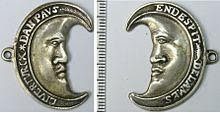
Half Moon Geuzen Medal, worn by the Dutch from 1566 to 1574

           These incidents might be shocking for the Islamophobes whose campaigns against Islam became a career or a condition for holding some positions! It might equally be incredible for the general public who constantly receives negative images of Islam and Muslims from the anti-Muslim media that vigorously works hard to present “The Islamic Threat” and create the stereotype of the Muslim as violent and intolerant of others faiths. However, these historical incidents embody the many Islamic teachings on coexistence, not just tolerance, with other religions. This article seeks to identify some of the roots of religious tolerance in Islam and how European reformers, who were ridiculed as ‘Mahometans’, came to admire the Islamic model of tolerance and called for adopting the religious diversity as ensured by the Muslim sultans.

           At the time when many medieval Christian rulers raised the motto “One State, One Law, One Faith” as their government policy which inevitably led to many religious persecutions of different sects within Christianity, Islam introduced an utterly different motto “There is no compulsion in religion” (Quran 2:256) which laid down the foundation for religious coexistence and non-interference with the beliefs of other religious communities. Even though this text was violated in a few cases in later history, Bernard Lewis affirms that “In the early centuries of Islamic rule there was little or no attempt at forcible conversion, the spread of the faith being effected rather by persuasion and inducement.” [3]

           What is so special about this Islamic motto? First, according to the above-cited verse, religious freedom was expressed as ‘a statement,’ not ‘a command’. The verse did not say, “Do compel others to leave their faith or embrace Islam;” rather, according to Arabic rhetoricians, the statement style indicates that religious tolerance has to be viewed as a nonnegotiable fact that cannot be rescinded, simply because compulsion is not an accepted conversion as God judges the heart, not the lip. Second, this verse was revealed in Madina when the Muslim community was considerably strong and dealt with Jews and Christians therein. Third, some people or systems may endorse tolerance in areas you do not value the most; for instance, a religious practice could be tolerated because it is not crucial in a specific worldview, whereas some political views could be suppressed in the same worldview. However, Islam adheres to religious freedom for non-Muslim communities even though the Muslim civilization is theocentric. 

           Above all, this motto was backed by a positive attitude toward human nature in general and the Judeo-Christian tradition in principle. Contrary to the Christian belief in original sin and the assumption that non-Christians are sinning even during their sleep, Islam restored the faith of the early prophets who affirmed that people are born sinless and that sins are acquired, not inherited. Furthermore, based on its affirmation of the unity of the Divine message, Islam accepts Moses and Jesus as great prophets who belong to a long chain of prophets with Muhammad as the Seal of all Prophets. Accordingly, Muslims do not see themselves following one of the conflicting religions but embracing the same faith shared and taught by God’s prophets.

           Due to this optimistic worldview, medieval Muslim history records unique moments of free-thinking and interfaith dialogues and debates about religious and philosophical issues, using reason alone with no references to one’s scripture. In al-Humaydi’s (d.) biographical work Jadhwat al-Muqtabis, tells the story of Abu’ Umar ibn Saadi who records his experience as follows:

“At the first session, I attended I saw a majlis [gathering] which included every kind of group: Sunni Muslims and heretics, and all kinds of infidels: Majus, materialists, atheists, Jews, and Christians. Each group had a leader who would speak on its doctrine and debate about it. Whenever a leader arrived, from whichever of the groups he was, the assembly rose for him, standing on their feet until he would sit down, then they would take their seats when he sat. When the majlis was jammed with its participants, and they saw that no one else was expected, one of the infidels said, “You have all agreed to the debate, so the Muslims should not argue against us based on their scripture, nor based on the sayings of their prophet, since we put no credence in it and do not acknowledge him. Let us dispute with one another only based on arguments from reason, and what observation and deduction will support.” Then they would say, “Agreed.” Abu Umar said, “When I heard that, I did not return to that majlis. Later someone told me there was another majlis for discussion, so I went to it, and I found them involved in the same practice as their colleagues. So I stopped going to the majlis of the theologians, and I never went back.” [4]

           Besides the freedom of faith granted to non-Muslim communities, this sense of religious tolerance, coupled with Muslims’ interest in and sponsorship of all fields of knowledge; led to the flourishing of religious study in non-Muslim faiths as the leaders of these faiths were motivated by the academic disciplines Muslim scholars expanded or even originated. For instance, the Jews, who suffered persecutions under Christian rule on account of the accusation of killing the Messiah, were encouraged, under Muslim law, to engage in the philosophical, legal, ethical, linguistic, and religious discussions of the day. Saadia’s The Book of Beliefs and Opinions, Maimonides’ The Guide for the Perplexed, Ibn Paquda’s Duties of the Heart, Solomon ibn Gabirol’s The Improvement of the Moral Qualities and Ibn Kammuna’s Examination of the Three Faiths, Judah Halevi’s The Book of Refutation and Proof on the Despised Faith and Al-Qirqisani’s The Book of Lights and High Beacons or Kitāb al-Ānwār wal-maraqib are just a few examples of medieval Jewish works initially written in Arabic and greatly influenced by Muslim works and spirit.   

           Many European theologians, philosophers, and reformers noticed this religious tolerance and advocated it as a model of religious tolerance for Europe to follow. For the sake of brevity, two tolerance advocates will be cited here to illustrate the European fascination with the Islamic model of tolerance as part of their attempt to encounter the wave of inquisitions and religious persecutions.

           First, based on a Protestant city council, Michael Servetus (d. 1553) was tried and burned alive for heresy as he denied the Trinity, the incarnation of Christ, and some other doctrines. Trying to put an end to such bloody acts, Sebastian Castellio (d. 1563) records this testimony:

“At Constantinople, there are Turks, there are Christians, and there are also Jews, three peoples widely differing in religion. Nevertheless, they live in peace, which certainly they would not do if there were persecution. A careful investigation will reveal that persecutors have always been the cause of great troubles. Wherefore, Princes and Magistrates, if you desire peace and tranquility, do not listen to those who invite you to persecution, for they are seditious …” [5]

            Second, based on perjured witnesses, a Protestant figure Jean Calas was accused of killing his son Marc-Antoine to prevent his conversion and executed in 1762. Following the trial of Jean Calas, the famous French philosopher Voltaire writes his Treatise on Tolerance to display Catholic fanaticism. Among the examples he cited as a model of religious tolerance, Voltaire calls on his people:

“Let us reach out from our narrow little sphere for a moment and examine what goes on in the rest of the globe. The Turkish prince, for example, rules peacefully over twenty races of different religious convictions; two hundred thousand Greeks live in Constantinople in perfect safety, and the Mufti himself nominates and presents the Greek patriarch to his emperor; there is even a Roman Catholic patriarch living there. The Sultan nominates Catholic bishops to some of the Greek islands, with the following words: “I commend him to go and reside as bishop on the isle of Chios following its ancient customs and vain ceremonies.” This empire is stuffed with Jacobites, Nestorians, Monothelites, Coptics, Christians of St John, Jews, Gebers, and Banians. The annals of Turkey bear no record of a revolt raised by any of these religious communities.” [6]

           These two examples illustrate that, in the middle of religious persecutions in Europe, some tolerance advocates made allusions to the Islamic model of governing to conjure up images of tolerance and coexistence to save medieval Europe from religious prejudice and pave the way for the Enlightenment. Religious tolerance with other faith communities has been part and parcel of the Muslim civilization. For those who want to know whether ISIS is true Islam or Un-Islamic, ask Sebastian Castellio or ask Voltaire! 

[1] Christopher Allmand, Rosamond McKitterick (ed.), The New Cambridge Medieval History: Vol. 7, Cambridge University Press, p. 782                                                                              

[2] For more details, see Benjamin Schmidt, Innocence abroad: the Dutch imagination and the New World, Cambridge University Press.

[3] Bernard Lewis, The Jews of Islam, Princeton University Press, p. 17

[4] Abu’ Abd Allah Al-Humaydi, Jadhwat al-Muqtabis, Cairo, 1953, pp. 101-102, cited in The Majlis: Interreligious Encounters in Medieval Islam edited by Hava Lazarus-Yafeh

[5] Sebastian Castellio, On Heretics: Whether They Are to Be Persecuted and How They Are to Be Treated, transl. R Bainton, Columbia University Press, p. 225

[6] Voltaire, Treatise on Tolerance, Cambridge: Cambridge University Press, 2000, p. 20-21
 

Fundraising 2020

Al-Siddiq School