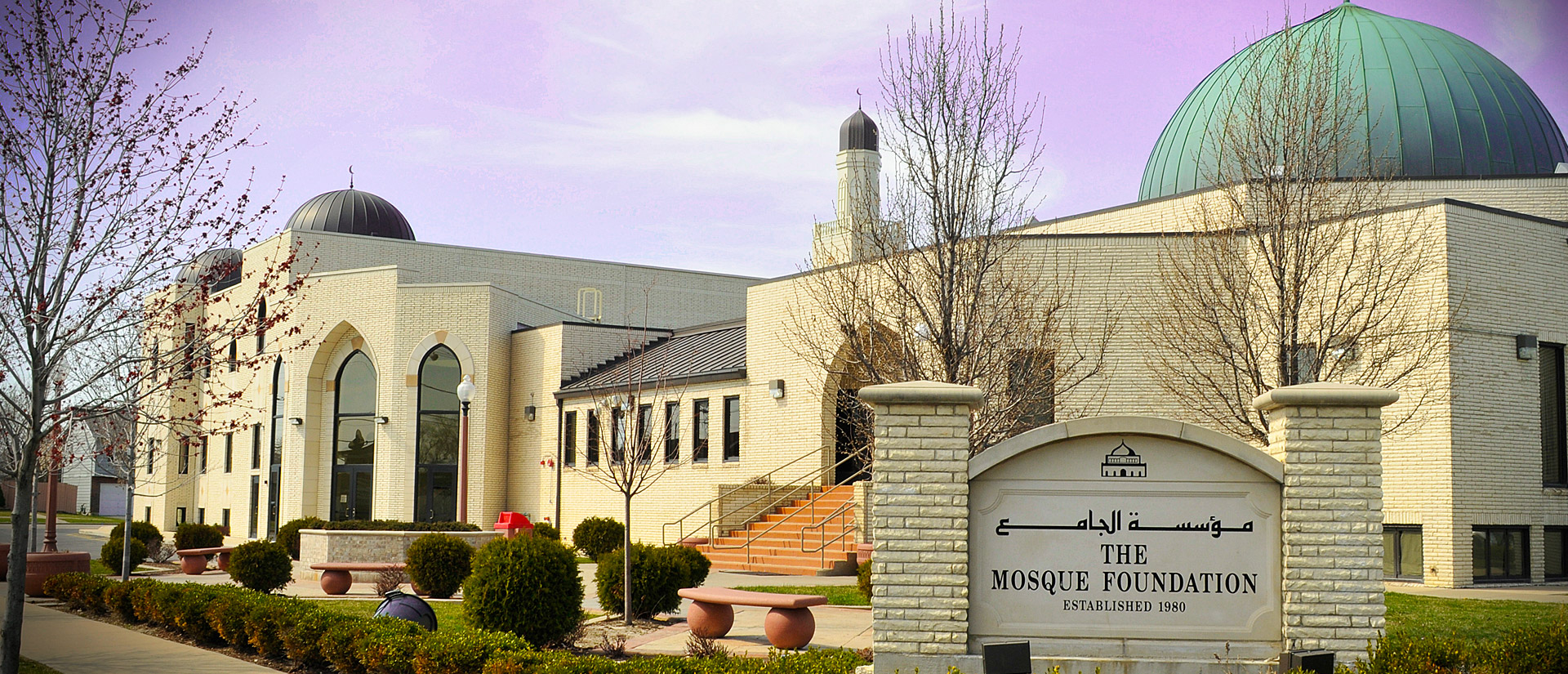
Mosque Foundation | Bridgeview, Illinois Logo
Mosque Foundation | Bridgeview, Illinois

Mosque Foundation

Keys to Enliven Your Salah, Part 2

First Friday Prayer is at 12:30pm. Second Friday Prayer is at 2:00pm.

Keys to Enliven Your Salah, Part 2

SH.ARAFAT

In the first section, we recognized the concept of Munajah (intimate conversations) with Allah U and how it permeated throughout the Prophet’s Salah. In this section, we will learn, through the recitation of al-Fatihah, that Salah is not one way conversation; rather, it is an actual conversation between us and Allah U.

Abu Hurayrahtsaid: I have heard the Prophetrsay: “AllahUhas said: I have divided prayer between Me and My servant into two halves, and My servant shall have what he has asked for. When the servant says: “All praise belongs to Allah, the Lord of all the Worlds,” says: “My servant has praised Me.” And when the servant says: “The Merciful, the Ever-Merciful,” Allahsays: “My servant has extolled Me.” When the servant says: “Master of the Day of Judgement,” Allah says: “My servant has glorified Me.” When the servant says: “You alone do we worship and from You alone do we seek help,” Allah says: “This is between Me and My servant, and My servant shall have what he has asked for.” When the servant says: “Guide us to the Straight Path, the Path of those whom you have favored, not of those upon whom is Your anger, nor of those who are astray,” Allah says: “This is for My servant, and My servant shall have what he has asked for.” [Reported by Muslim and others]

For an effective prayer, here are few notes derived from this Hadith:

(1)   Pause at the end of each ayah. These frequent pauses will help you control your thoughts and regain your concentration as you can easily recognize your outside-Salah thoughts. However, reciting al-Fatihah fast will serve only as a lip service whereas Salah is supposed to be a Heart service.

(2)   As you pause at the end of each ayah, allow moments to feel Allah’s response. This is actually an unappalled, spiritual joy that can be experienced, not described. In his book al-Salah wa Ahkam Tarikiha, Imam Ibn al-Qayyim observes: ByAllah, if the fumes of desire and the rust of sins and enormities were not placed upon the hearts, these hearts would have flown out of happiness and joy as their Lord, Maker and Deity says: “My servant has praised Me, My servant has extolled Me and My servant has glorified Me.”

(3)   Each word of al-Fatihah (and all the other praise statements) has to be expressed with clarity. Mumbling the prayer recitations and uttering words quickly and indistinctly with partly closed lips will never nurture your heart or help you grow spiritually. For instance, compare al-Hamdu Lillahi Rabbil ‘Alameen (when each word or cluster is clearly pronounced) with hamlirabilameen (when it is mumbled and turned into a meaningless sentence).

(4)   Recognize that al-Fatihah has three main sections with three connected themes. First, the Surah starts with praising Allah U through a list of Divine attributes (Lord of the Worlds, the Merciful, the Ever-Merciful and Master of the Day of Judgment)—all in the third person: “He.” Second, as we recognize Allah’s attributes in the first theme, we feel his presence and closeness; that is why, the second theme begins with a pronoun shift “You do we worship, and You do we seek help from” to imply the sense of closeness and to make a covenant and commitment with Allah Uto obey Him. Third, the Surah closes with a prayer for unceasing Divine guidance.

(5)   Remember that the first two themes are the introduction to the prayer for Guidance. So, do you really mean it when you say: “Guide us to the Straight Path …”? Does it make sense to ask God for something with a totally distracted mind? 

By Sh. Ahmed Arafat

Keys to Enliven Your Salah, Part 1


Have you ever felt that your performance in salat was reduced to mumbled words? Or that mindfulness and connectedness was absent during your prayer? Well, you are not alone! Many people express the same concerns and desire to experience more meaningfulness during salat which supports their spiritual growth. The goal of this series is to illustrate different ways, or keys, to rescue and enliven salat.

The first key is to approach salat as a form of Munajah, or an intimate conversation with Allah (SWT). Missing the sense of Munajah will cause your performance in salat to be automatic, machine-like movements. The following are examples drawn from the Sunnah which illustrate the power of Munajah in the salat of Prophet Muhammad (S):

(1)   After the first Takbirah, Prophet Muhammad (S) started with “Du’aa’ al-‘Istiftah” or an opening prayer. There are a variety of opening ‘ad’iyah Prophet Muhammad (S) was reported to have used. Here are some examples:

“I turn my face in complete devotion to One Who is the Originator of the heaven and the earth and I am not of the polytheists. Verily my prayer, my sacrifice, my living and my dying are for Allah, the Lord of the worlds; There is no partner with Him and this is what I have been commanded (to profess and believe) and I am of the believers.”[Muslim]

“Glory be to you, O Allah, and all praises are due unto You, and blessed is Your name and high is Your majesty and none is worthy of worship but you.”[Al-Tirmithi]

“O Allah, put a great distance between me and my sins, as great as the distance You have made between the East and the West. O Allah, cleanse me of sin as a white garment is cleansed from filth. O Allah, wash away my sins with snow and water and hail.” [Bukhari & Muslim]

(2)   Besides “Subhana Rabbiya al-‘Atheem” during his ruku’ (bowing position), Prophet Muhammad (S) would add:

“O Allah, to You I have bowed, in You I believe, to You I have submitted and in You I put my trust. You are my Lord. My hearing, my sight, my blood, my flesh, my bones and sinews are humbled before Allah, the Lord of the Worlds.” [Muslim]

(3)   Rising from ruku’, Prophet Muhammad (S) would add:

“Our Lord, praise is Yours, abundant, good and blessed praise, fills the heavens and the earth and what lies between them, and whatever else You please. (You Allah) are most worthy of praise and majesty, and what the slave has said – we are all Your slaves. O Allah, there is none who can withhold what You give, and none may give what You have withheld. And the might of the mighty person cannot benefit him against You.” [Muslim]

(4)   Besides “Subhana Rabbiya al-A’la” during his sujud (prostrating position), Prophet Muhammad (S) would add:

“O Allah, to You I have prostrated and in You I have believed and to You I have submitted, and You are my Lord. My face has prostrated to the One Who created it and formed it, and brought forth its hearing and sight. Blessed be Allah the best of Creators.” [Muslim]

(5)   Between each sajdah, Prophet Muhammad (S) would say:

“O Allah, forgive me, have mercy on me, guide me, heal me, and provide for me.” Or “My Lord, forgive me.” twice [Abu Dawud]

In our next section we will briefly explore Surat al-Fatihah and how Prophet Muhammad (S) approached it as a form of Munajah with Allah (SWT).

By Sh. Ahmed Arafat

Good News for Sinners (2)

SH.ARAFAT


Many people assume wealth is measured by how much money one has; Prophet Muhammad (PBUH), however, offers an entirely different perspective. Abu Hurayrah R) reported that the Messenger (PBUH) said, “Wealth is not the abundance of [material] possessions; wealth is self-contentment.” (Bukhari & Muslim)

           The aforementioned Hadeeth explicitly teaches us that the key to gaining real wealth is being satisfied with what one already has. Simply put, if you are constantly being plagued with the feeling of needing more, then you are not rich- regardless of how much money you might have; if you feel satisfied with what you have, on the other hand, then you are, by this definition, rich regardless of how much money you may possess. Money alone cannot bring about inner happiness for two main reasons: (1) a rich but greedy person may whittle his material possessions down to nothing and still feel miserable, and (2) these material possessions may be lost and turn into a source for depression.

             If we can agree that contentment is real wealth, then discontentment must be real poverty. Discontentment can make a person loose their sense of worth and sense of efficacy. Those who have allowed Hollywood culture to pervade their lives often fall prey to the idea that possessing self-worth is equated to possessing the material wealth celebrities have (lavish materialism, skewed standards of beauty, age, wealth …etc.). For this reason, many people idolize celebrities. Moreover, millions of dollars are spent on advertisements persuading people to use their credit cards to buy non-essential materials they can do without or may not even use. People end up drowning in debt, which further complicates their lives and places great pressure and stress on them.

              Imam Muslim reports that the Prophet (PBUH) said, “Be pleased with what Allah has given you and you will be the richest of people.” By taking this Hadeeth in light of what we have learned from the first Hadeeth, we can recognize that self-contentment comes from being pleased with Allah’s decrees. Therefore, self-contentment requires faith, trust and a God-oriented heart. The Quran accurately describes the rewards promised to the believers, “Whoever does righteous deeds, whether be a male or female, and he has Faith, we will make him lead a good life.” (16:97) Some scholars interpret ‘good life’ here as a ‘life filled with contentment.’

          It is interesting the quality of self-contentment found in the Hadeeth under discussion indicates that real wealth is an inner experience that relates to what is happening inside of us, not around us. Therefore, contentment has nothing to do with laziness or giving up or becoming passive; rather, it fights greed, self-indulgence and countless conflicts which lack of contentment causes. What denies contentment is not our desire to improve our situations, but the reckless, selfish competition for material gain through haram channels. For instance, work that leads one to cheating, dishonesty and corruption is a sign of greed and discontentment. Falling into debt to buy a car for the sole purpose of impressing others is another sign of discontentment and lack of real personal freedom.

            With this said, a Muslim can be content and still work on improving his or her life situations. To avoid falling into the trap of greed, a Muslim must work towards meeting three conditions. First, the work or the source of money must be halal. Second, the work does not result in violating the teachings of our faith nor neglecting religious or social obligations; such as, the five daily prayers and family rights. Third, the acquisition of money does not promote having a self-centered life; but rather, earning money should make one feel responsible for helping the poor and the needy, especially through the mandatory annual Zakat. Giving for the sake of Allah is evidence that a person is generous, thankful and faith-filled. In this manner, wealth and contentment can go hand-in-hand. Moreover, wealth can be a blessing for the individual and the community. Prophet Muhammad (PBUH) was reported to have said, “Blessed is the money in the hands of a righteous man.”

Developing Contentment

Contentment can be learned.Although some people are naturally content, it does not mean that if you are not born with this value you cannot develop it. The Prophet (PBUH) was reported to have said, “Were the son of Adam to have a valley of gold, he would crave another. He will not be satisfied till he passes away. However, Allah accepts those who repent.” The first part of the Hadeeth explains that many people want (and not necessarily need) more. However, the underlined part of the Hadith tells us indirectly that people have a chance to fight greed and covetousness through repentance. Here are some ways we can develop the essential value of contentment:

(1)   Compare yourself to people who have less than you.Unfortunately, many people fall into the trap of comparing their lives to that of richer people only to end up feeling either second-rate or deprived. Prophet Muhammad (PBUH) was reported to have said, “[In terms of material possessions], look at those who are inferior to you and do not look at those who are superior to you. By doing so, you will not belittle Allah’s blessings on you.” (Bukhari & Muslim) This means we should focus on what we have rather than what we do not so that we do not fall prey to the comparison trap.

(2)   Count your blessings and be thankful.Unless we recognize Allah’s blessings upon us, we cannot practice contentment. Whenever we feel discontentment, we should take a moment and write down Allah’s blessings. We do not need to go very far in doing so and can simply ask three basic questions: ‘Do I feel safe? ‘Do I have a serious disease?’ ‘Do I have food for the day?’ If we are able answer these questions in the positive, we should count ourselves among the most blessed people in the world. This is exactly what our Prophet (PBUH) emulated for us. Prophet Muhammad (PBUH) was reported to have said, “Whoever wakes up feeling secure, free of [serious] diseases and having sufficient food for his day should know that he is given the entire [pleasures of] life!” (At-Tirmidhi)

 (3)   Remember that this life is a test! Adopting the Hereafter as your goal prevents being trapped into discontentment. Once you look at this worldly life as Allah’s test and do your best to pass it—through patience and gratitude—you will have a strong feeling that your life is rewarding and meaningful, no matter what difficulties come your way. The Quran teaches us that this worldly life is a test and the Hereafter is the superior, eternal life, “Do not gaze longingly at the pleasures of the splendor of the worldly life that We gave different classes of them [unbelievers]. It is a test for them, and Allah’s provision is far better and everlasting.” (20: 131)

 (4)   Fight Greed through Giving.There is great contentment and joy to be gained from giving. Giving is a sign of the absence of greed. Giving will make you among the better ones. Prophet Muhammad (S) was reported to have said, “The Upper Hand [that of a giver] is better that the Lower Hand [that of a recipient]. Start with your dependants.”      

 (5)   Make dua’a for contentment.Bukhari and Muslim report on the authority of A’isha (R) that the Messenger of Allah (PBUH) used to repeat the following prayer, “‘O Allah, I seek refuge with You from sin and heavy debt.’ Someone exclaimed, ‘How often you seek refuge from heavy debt!’ He (PBUH) said, ‘When a man falls into debt, he speaks and tells lies, and he makes a promise and breaks it.’” It was also reported that Prophet (PBUH) used to pray every morning and every evening stating,“O Allah I seek refuge of you from worries and grief. I seek refuge of you from helplessness and laziness. I seek refuge of you from cowardice and miserliness. I seek refuge of you from mounting debts and being overpowered by men.” This dua’a is an indication of the balance our faith teaches us in working to gain provision without making provision our source of contentment.

O Allah bring Your peace into our hearts, into our families, into our communities and into the world. O Allah kindle in our hearts Your love, the love of those who love You and the love of all that You love. Ameen.

By Sh. Ahmed Arafat

Between Muslims and Christians

Kifah Mustapha

In light of the dinner initiated by the Council of Islamic Organizations of Greater Chicago honoring his eminence Cardinal Francis George on April 2, 2014, I wanted to share these thoughts that I hope will lay a foundation of understanding the relationship between the people of both faiths from an Islamic perspective:

Thou shall know each other

{Indeed, We have created [all of] you from a [single] male and female. Moreover, We have made you peoples and tribes, so that you may [come to] know one another. And. Indeed, the noblest of you, in the sight of God, is the most God-fearing of you. Indeed, God is all-knowing, all-aware} 49:13.

Imam Al-Aloosi says: “{So that you may [come to] know one another} is the reason behind {have made you}. We have been made of such, so we may know each other, strengthen kinship and clarify inheritance, not to grow arrogant in the pride of belonging to fathers and tribes.”[1]

Knowing one another builds relationships, and relationships bring trust for the well-being of both communities. I recall a quote from the Cardinal’s speech which touched on this same point: “If relationships come, everything will follow.”[2]

Thou shall be neighbors

{God does not forbid you from [honorable relationships with] those who have not fought you over religion, nor expelled you from your dwellings- that you relate kindly and equitably with them. Indeed, God loves those who are just} 60:8.

The term “Al-Birr” {relate kindly and equitably} is of the highest levels of ethics as concluded from many verses in the Holy Quran and the tradition of Prophet Mohammad (Peace and Blessings are upon him.) And in the verse mentioned above, the level of morality was guided by the concept of being {just}; and for the spirit of being neighbors which instills such values is the guide for the type of relations we are seeking between Muslims and Christians.

Thou shall be partners

{Rather, you shall help one another to virtuousness, and to the fear of God. But you shall not help one another to sin and to aggression. Therefor fear God} 5:2.

It was narrated that Prophet Mohammad (Peace and Blessings are upon him) witnessed a treaty made among the tribes of Quraish in support of the rights of merchants doing business in Mecca and of anyone being dealt with unjustly. He (Peace and Blessings are upon him) said later after being called for Prophecy: “I have witnessed an entente in the House of Abdullah son Jada’an; I would not have loved [as a substitute] the best of camels. And if I was called to join in it during Islam I would have answered.”[3]

In light of the many values we share as Muslims and Christians, as well as the many challenges, we owe each other to come together to work as partners to bring the best outcomes for our community.

Thou shall be humans

{Yet very truly, We have so honored the Children of Adam: For We have carried them through the land and the sea. And We have provided them with all that is wholesome [in life]. And We have so favored them above most of what We have created with [such immense] favor} 17:70.

Being Children of Adam brings the human aspect, with all the natural composition and inclinations within us, to a level of respecting the kind, honoring the sacred, securing the needs and preventing harm to all of us.

Thou shall care for each other

{And you shall assuredly find that the nearest of [all of] them in genuine love to those who believe are those who say: We are, indeed, Christians. That is because there are among them priests and monks- and they do not grow arrogant} 5:82.

Such a humble status brings people close. It was narrated that the Prophet (Peace and Blessings are upon him) said: “The Day of Judgment shall start and (Al-Room) Christians are of the most in numbers on earth.” Amr son of Al-Aas said to the narrator: “If the Prophet (Peace and Blessings are upon him) said that, I also know four qualities about them: they are of the best of reasoning in times of trials, they are of the fastest comeback after disasters, they are quick in recovering after (war) loss, and they give good treatment for the poor, orphans and needy. And an extra great and beautiful fifth quality is that they are among the most rejecting to kings’ tyranny.”[4]

For all great qualifications in relation to all that was mentioned, you shall care for such values as it reflects quality on all.

Thou shall belong in Homeland

{And to [the people of] A’d, [We sent] their brother Hud [as a messenger]. He said: O my people! Worship God [alone].} 7:65. {And to [the people of] Thamud [We sent] their brother Salih [as a messenger]. You do not have any God other than Him} 7:73.

We are brought together in a Homeland and a sense of citizenship that requires us to be united against all that is harmful to the community. Along the same lines we must join together in favor of all the good aspects of life for the community. From fighting crime to honoring rights of workers, and from standing firm against social moral diseases to preserving families, we as Muslims and Christians have lots of work to keep us busy.

Thou shall socialize

{Thus the food of those who have been given the Scripture is lawful for you. And your food is lawful for them} 5:5.

It is a clear invitation to break bread together and socialize in the spirit of being family, friends, neighbors, citizens and people of faith.

I hope and pray that the future will continue the ongoing partnerships between the Muslim and Christian Communities in Chicago and all around the world, and open doors for new ones.

Sh. Kifah Mustapha

[1] Rooh Al-Ma’aani

[2] As I recall it from his speech at the dinner

[3] Narrated by Al-Baihaqi

[4] Muslim

Sh. Kifah Mustapha

Essential Disciplines for Spiritual Maturity

Brokenness and Breakthrough

Once upon a time, the different kinds of birds gathered to select a king to rule over them. They agreed that the phoenix that lived far away was the bird that genuinely deserved to be the king. Their deep yearnings motivated them to start a long journey to reach the king and have the pleasure of placing themselves in its service. Some other birds warned the passionate birds from the high mountains, extensive desert, torrid and frigid zones they would necessarily face and thereby lose their life. Yet the longing of the vibrant birds increased, and their joy drowned all thoughts of hesitation. As expected, many of the birds were struck by the thunderbolts and lashed by storms. Finally, a small group of passionate birds reached the island of the kind safely. Upon hearing of their presence, the king ordered one of the royal attendants to inquire about the birds’ mission. “We want the king to rule over us,” said the birds. Upon this, the king commented: “You just troubled yourselves in vain since I am your king whether you like it or not and whether you come or go!” The birds felt embarrassed and helpless, and a sense of awe terrified them. At this moment, when the birds recognized who they were and who the king was, the king said:

“إن كان كمال الرضا يوجب التعزز و الرد فإن جمال الكرم يوجب المسامحة و القبول. فبعد أن عرفتم قدرنا فحقيق بنا إيواؤكم فهو دار الكرم و منزل النعم”

“If my absolute sovereignty demands self-sufficiency, the beauty of my generosity demands acceptance and benevolence. Since you understand our status, it behooves us to shelter you since this [place] is the abode of generosity and blessings.” As the passionate birds felt more relieved and joyous of their closeness to the king, they wondered whether the other birds that died in the way lost their lives in vain. To remove all doubts, the kings affirmed that those birds who died in their way to him willfully receive their reward and mercy from him.

These are excerpts from Imam al-Ghazali’s the Treatise of the Birds, which seeks to illustrate one of the most important spiritual disciplines that Ibn al-Qayyim, in his Madarij, would later describe as “the soul, secret, essence, and goal of all stations in the path to Allah.” This essential discipline is ifiqar or the ability to develop, demonstrate, and maintain a constant and robust sense of brokenness and surrender to God. The Quran reads: “O people, you are those who stand in need of Allah, and Allah is the Self-sufficient and Praiseworthy” (Quran 35:15). The phrase “those who stand in need of” is al-fuqara’ (the poor) in Arabic. The word does not originally mean a lack of money or material assets; however, it refers to ‘broken bones,’ which eventually cause inability and need.

When it comes to our relationship with God, faqr (need or poverty) is essential to our human nature, no matter how much wealth and health we have. If you need to breathe, allow yourself to feel your iftiqar to Allah. If you need to sleep, allow yourself to feel your iftiqar to Allah. If you need to eat, allow yourself to feel your iftiqar to Allah. If you need what you have (health, wealth, or the like), allow yourself to feel your iftiqar to Allah.

Do not let your talents, skills, possessions, achievements, or reputation make you forget your unavoidable characteristic of essential need. In his Tariq al-Hijratayn, Imam Ibn al-Qayyim invites us to contemplate on our condition as we were babies. We were very weak and naïve, having no power to help ourselves. As we get our physical and intellectual faculties and powers developed, we forgot who we were, experienced pride, and thought we became so ‘self-sufficient and self-independent’ that we did not need God! Ibn al-Qayyim writes: “As God perfects our hearing, sight, and reason, and as He makes the universe subservient to us, we poor humans start to think that we have a share in this kingdom and look at ourselves with different lenses. We even forget our early state of helplessness, poverty, and need as if we never experienced these features and as if we are different creatures!” Look at a baby and observe its need and helplessness. Now, recognize you were one before, and do not be distracted by your apparent talents. The Quran beautifully depicts this moment of nonsensical human arrogance, which results from lack of our self-knowledge: “He [God] created man from a sperm-drop; yet suddenly he openly challenges Him!” (Quran 16:4). The Arabic word for “yet suddenly” is fa’idha, which grammatically indicates that what comes after it does not follow logically from what comes before it.

Ibn’ Ata’illah expresses our Iftiqar very powerfully in his aphorisms:

There are two graces that no being can do without and necessary for every creature: the magnificence of existence and the grace of sustenance.

He bestowed His grace upon you, first, through giving you existence, and, second, through uninterrupted sustenance.

Your need belongs to you essentially, for accidents do not abolish essential requirements. The trials that arrive in this world are but reminders to you of what you ignore of need.

Exercises for Willful Iftiqar:

It should be clear that the sense of brokenness we are addressing here is the heart’s attitude that naturally develops as we recognize who we are and who God is. It is supposed to be an ongoing attitude of the heart. It is essential to allow ourselves to experience that sense of iftiqar as a choice and willingly and continually yield to brokenness. Here are some exercises to feel our iftiqar to God and to be in total dependence on Him.

Mindful Dhikr

Set some private time of solitude. Inhale and exhale from your nose mindfully for a few minutes. Realize that, as a human being, you are several breaths, and that once you reach the predetermined number God decided for you, you become a resident of the afterlife. Now repeat calmly, slowly, and clearly: “la hawla wala quwwata illa billah” (There is no power or strength except that which comes through Allah). Have a pause after each time you say this dhikr till the meaning sinks in your heart. Reciting this dhikr could change the meaning or turn it into meaningless mumbled words. This Dhikr is unrestricted and unlimited; that is, it is not limited to specific situations or numbers.

Fasting

It is easy to be deceived by the luxury we have, the technological advancement we enjoy, the military power we develop, or the medical services we are offered. Some may unconsciously feel that they do not need Allah, and others may act as gods! However, none of these material advancements will change our big human reality; that is, we have a built-in need for our Creator, who makes our very existence possible. To al-Ghazali, we receive an opportunity to develop more humility through mindful fasting and temporary hunger and keep our ego in check. We recognize how fragile and weak we become in the absence of some morsels and water.

Contemplation

Meditate on “We belong to God, and to Him we shall return” (Quran 2:156). Realize that when you say: “We belong to Him,” you should be aware that it means “Nothing belongs to us!” Nothing is deserved. Everything we have is a pure act of grace and fadl. Once this fact reaches your heart, you will be able to break free from arrogance, pride, and complaint.

Munajah

Start enriching your Salah by expressing your Iftiqar in Munajah (intimate conversations) with Allah. If your Salah is void of this kind of Munajah, it might be reduced to mumbled words. To achieve this Munajah, nothing would be better than following the Prophet’s Sunnah. For instance, the Prophet used to add to the Ruku’ dhikr:

“O Allah, to You I have bowed, in You I believe, to You I have submitted and in You I put my trust. You are my Lord. My hearing, my sight, my blood, my flesh, my bones, and muscles are humbled before Allah, the Lord of the Worlds” (Muslim).

To the Sujud, the Prophet used to add:

“O Allah, to You I have prostrated, and in You, I have believed and to You, I have submitted, and You are my Lord. My face has prostrated to the One Who created it, formed it, and brought forth its hearing and sight. Blessed be Allah the best of Creators.” (Muslim).

Prayers of Praise

As hard times engulf him, the Prophet would sometimes raise his hands and pray solely for entrusting Allah with all of his worldly affairs or celebrating the praise of God without asking specifically for the removal of harm. In a famous du’aa called du’aa al-Karb (prayer for distress or depression), the Prophet used to say: “Lord, I seek Your mercy. Do not leave alone to myself even for a blink of an eye. Amend for me all my matters. There is no god but You” (Abu Dawud). In another Hadith, the Prophet says: “There is no god but Allah, the Great, the Tolerant, there is no god but Allah, the Lord of the Magnificent Throne. There is no god but Allah, the Lord of the Heaven and the earth, the Lord of the Honorable Throne” (Muslim).

Hajj

Pilgrimage is a spiritual journey of iftiqar where one leaves behind his money, family, and position. It allows oneself to be less attached to this life and experience authentic moments of Zuhd or asceticism.

Brokenness and wholeness

In our materialistic world, words like brokenness and surrender conjure up images of sadness and emotional hurt; however, in our relation with God, these words reflect our real nature that, once acknowledged, we feel the divine closeness and mercy. Brokenness before and surrender to God makes us attached to Allah and determined to cling to Him, without reliance on our possessions, no matter what we have. This brokenness is the real riches as we attach our hearts to the Eternal, the Real, not the temporary or the transient.

This attitude of the heart is necessary for survival. Since life is a test, a mixture of good and evil, and things may not go the way we want all the time, our sense of willful iftiqar can help us survive any trial or tribulation. Ibn’ Ata’illah advises:

“So long as you are in this world, be not surprised at the existence of sorrows. For, truly, it manifests nothing but what is in keeping with its character or its inevitable nature.”

Unlike rebellion and denial of our fragile nature that could lead to unhealed damages, willful iftiqar makes us more corrosion-resistant and malleable as we face the difficulties of life. Our willful constant Iftiqar would help us put down our self-rebellion and yield easily to the trials that are beyond our control. People with iftiqar can be ‘reshaped’ without being ‘destroyed’. The Prophet illustrates: “The example of a believer is that of a fresh and standing plant. The wind sometimes bends it and sometimes straightens it up, and then it comes to its destined end. And the example of a hypocrite is that of a hard tree which is not affected by anything but is uprooted once for all” (Reported by Muslim).

As the rain comes when the clouds break, the Divine mercy descends when our hearts break. Given that Iftiqar is “the soul, secret, essence, and goal of all stations in the path to Allah,” acknowledging and embracing our brokenness before God is a short-cut way of receiving His mercy. The Quran reads: “Those who say, when afflicted with a calamity, ‘We belong to God and to Him we shall return. These will be given blessings and mercy from their Lord, and it is they who are rightly guided” (Quran 2:156-157).

Instead of rebelling due to some trials or disappointments, approach Allah with that broken heart, that pain, and turmoil, and become one of his closest servants who choose willingly to surrender and acknowledge the reality of who they are and what life is. Having trials does not mean that Allah abandoned us. Imam Muslim reported that: “Allah will say on the Day of Resurrection: O child of Adam, I fell ill and you did not visit Me. The servant will say: O Lord, and how could I visit You, whereas You are the Lord of the worlds? God will say: Did you not know that My servant so-and-so had fallen ill, and you did not visit him? Did you not know that had you visited him, you would have found Me with him? …”

It should be noted that Iftiqar could emerge from an overwhelming feeling of guilt due to some sins committed. If that sin broke your heart, and you felt guilty, never let the Devil lead you into despair or hopelessness. Instead, approach God with that contrite heart, be sincere in your repentance, and Allah will indeed accept since He does not break His promise. This is one of the ways when sin leads one to God! Ibn’ Ata’illah beautifully captures this idea in his aphorisms:

“A sin that leads to humility and surrender is better than an act of worship that leads to pride and arrogance.”

Finally, as al-Ghazali illustrated in Treatise of the Birds, scholars affirmed that feeling the sense of surrender and brokenness before God is a short-cut way to God. Al-Jilani, one of the early spiritual leaders of Islam and a Hanbali jurist, noted: “I tried to reach God through all doors, yet I found them all crowded. It was until I found the door of surrender and brokenness empty that I entered and called out: come!” Similarly, Ibn al-Qayyim reaches the same conclusion: “The closest door one would go through to reach God is that of impoverishment where one sees that one has no spiritual accomplishment to cling to or a righteous deed to give as an offering to God. Rather one enters through the door of absolute brokenness and utter impoverishment that pierced the very center of one’s heart, causing it to be fully torn apart. Besides, one mindfully realizes one’s indispensability to and complete need of God and recognizes that in each atom of one’s outward and inward being, there is complete need and essentiality of his Lord. Were God to abandon one for a blinking of an eye, one would suffer massive loss unless God has mercy on them.”

May Allah fill all broken hearts with inner peace and bind up their wounds. Ameen.

By Sh. Ahmed Arafat


“وأقرب باب دخل منه العبد على الله تعالى هو الإفلاس، فلا يرى لنفسه حالاً ولا مقاماً ولا سبباً يتعلق به، ولا وسيلة منه يمن بها بل يدخل على الله تعالى من باب الافتقار الصرف والإفلاس المحض دخول من كسر الفقر والمسكنة قلبه حتى وصلت تلك الكسرة إلى سويدائه فانصدع وشملته الكسرة من كل جهاته وشهد ضرورته إلى ربه عز وجل وكمال فاقته وفقره إليه، وأن في كل ذرة من ذراته الظاهرة والباطنة فاقة تامة وضرورة كاملة إلى ربه تبارك وتعالى، وأنه إن تخلى عنه طرفة عين هلك وخسر خسارة لا تجبر، إلا أن يعود الله تعالى عليه و يتداركه برحمته.” ابن القيم


Guard your Gains


“And do not consume one another’s wealth unjustly or send it [in bribery] to the rulers so that [they might aid] you [to] consume a portion of the wealth of the people in sin, while you know [it is unlawful]” (Quran 2:188). This verse comes immediately after a lengthy description of fasting and the rules regarding the abstinence from food and drinks during Ramadan. This sequence communicates a direct and straightforward insight; that is, managing to stay away from the consumption of essential halal food temporarily empowers us to stay away from the engagement in haram behavior or transactions permanently. If we manage to avoid the halal during Ramadan, we can quickly realize that we can prevent the haram after Ramadan. Only what we need is more discipline, not more motivation. Motivation does not change our behavior; discipline does. 

Discipline is defined as “training expected to produce a specific character or pattern of behavior.” The spiritual exercises in Islam, such as regular prayer, fasting, remembrance of Allah, du’a, giving, pilgrimage, self-examination, etc., are designed to facilitate our spiritual growth and character building. They are not mere ritualism. Being consistent in practicing these disciplines will eventually lead to spiritual “self-discipline” as we become more affirmed in our identity as believers.  


Let us consider the five daily prayers and its role as a spiritual discipline. First, offering these prayers gives us a break from our exposure to sin or haram environment. If we keep exposing ourselves to the haram, we start developing an acquaintance with sin. This sinful familiarity will “minimize the burden of sin against the self and diminish the heart’s distaste of sinning,” as explained by Imam al-Ghazali. Second, the regular observance of these prayers serves as protection from feelings of despair when we fall. During the prayers, we prostrate before Allah in complete surrender. This surrender is a way of renewing our covenant and relationship with Allah, a form of demonstrating who we are and who He is. A faithful, humble servant finds joy in expressing this relation; yet, an arrogant heart that idolizes itself finds it challenging to convey this undeniable fact. 

Moreover, when the prayers are offered in congregation, the spiritual benefits will be maximized as the daily prayers ensure the creation of a supportive community where you do not feel spiritually lonely in a world of materialism and distraction. It is hard to separate our spiritual growth from our environment. Learn from the Bonsai tree. Some tend to view it as a dwarf; yet, it has the same potential to grow as a full-size tree. It is the tiny pots it is raised in that restrict its growth.

By Sh. Ahmed Arafat

Beauty as Revelation


BEAUTY DEFIES ATHEISM AND IGNITES FAITH

“Who created the heavens and the earth and sent down, for you, from the sky, water with which We grow gardens of joyous beauty which you could not [otherwise] have grown their trees? Is there another god besides God? No! But they are people who ascribe equals to God” (Quran 27:60). 


I

Every idea has a consequence. It is illogical to believe in “A” while denying “B” if “B”  naturally and necessarily follows from “A.” Practically speaking, in the atheistic worldview that allows no room for God or any supernatural power behind this world, everything that exists is reduced to a combination of molecules and some chemical reactions between atoms. This dangerous idea leads to many disasters, the darkest, scariest, and most depressing of which there is no meaning or purpose in life. Meaning, purpose, or value is not ascribed. To atheists, the beautiful stars you see are random blobs of burning gases, and the handsome atheists are accidental blobs of dying chemicals that evolved in a mysterious and purposeless way.

The philosophical and logical problem in this way of thinking is that it is self-defeating. To argue that there is no meaning, there first has to be meaning to argue for or against your statement; otherwise, the atheistic worldview has to be meaningless too as it belongs to this meaningless world. Richard Dawkins, a British ethologist, evolutionary biologist, and author, admits: “In a universe of blind physical forces and genetic replication, some people are going to get hurt, other people are going to get lucky, and you won’t find any rhyme or reason in it, nor any justice. The universe we observe has precisely the properties we should expect if there is, at the bottom, no design, no purpose, no evil and no good, nothing but blind, pitiless indifference.” [1]

Ironically, Dawkins’ is a deluded logic. How would he complain that some get hurt and others lucky if no good or evil exists? If there is no meaning, no design, and no purpose, why does he try to convince us that his atheistic worldview is ‘meaningful’ while asserting there is no such a thing? Judged by the atheistic worldview, many terms are problematic, such as “the selfish gene” Dawkins likes to refer to; yet, he fails to tell us where the idea of ‘selfishness‘ comes from, or if it has meaning at all! Basically, any idea an atheist zealously tries to convince us of is basically and unconsciously a violation of their worldview, simply because any discussion becomes as meaningless and purposeless as the world in its atheistic view. Take Prof. William Provine’s summary of the consequences of his orthodox evolutionary theory: “There is no ultimate foundation for ethics, no ultimate meaning in life, and no free will for humans, either.” [2]

Again, how can we trust this statement if it results from meaninglessness and no free will?

Much worse still is that if our thinking and perceptions are upshots of a purposeless evolutionary process in a meaningless cosmos, trusting our minds and critical abilities becomes an illusion. Darwin himself was aware of this problem as he admits: “But then with me, the horrid doubt always arises whether the convictions of man’s mind, which has been developed from the mind of the lower animals, are of any value or at all trustworthy. Would anyone trust in the convictions of a monkey’s mind, if there are any convictions in such a mind?” [3]

Suppose there is no designer for our brains to think. In that case, our thinking is reduced to chemical reactions that have no meaning, and thereby all thinking, including atheistic thoughts and scientific inferences, is discredited. Furthermore, our own will becomes an illusion, as Sam Harris argues. Therefore, if God is dead, man is dead too! If God is an illusion, man is an illusion also!

We need to differentiate between science and the interpretation of science; science and scientism. Here is a Quranic warning against failing to embrace common sense:

Indeed, within the heavens and earth are signs for the believers.

In the creation of you, in the creatures God scattered on earth, there are signs for people of sure faith;

And in the alternation of night and day, and the provision (rain) that Allah sends down from the sky, and revives therewith the earth after its death, and in the turning about of the winds are signs for people who understand.

These are the verses of Allah, which We recite to you in truth. Then, in what statement, after Allah and His verses, will they believe?” (Quran 45:3-6)

There is nothing worth believing if this whole universe is reduced to depressing atheistic views. When I say nothing, I mean nothing, including science itself! In this way, faith is the only thing that saves science and gives meaning to life. That is why Haldane had to admit: “It seems to me immensely unlikely that mind is a mere by-product of matter. For if my mental processes are determined wholly by the motions of atoms in my brain, I have no reason to suppose that my beliefs are true. They may be sound chemically, but that does not make them sound logical. And hence I have no reason for supposing my brain to be composed of atoms.” [4]

The good news is that we are hardwired to believe that there is meaning, purpose, and will, and we behave accordingly. Any court system affirms this inescapable truth. This hardwired faith immunizes against atheism and alerts us to the metaphysical component in us. The Quran calls this unavoidable faith “Fitrah” (natural human disposition to believe in God), a word derived from the same root for the word ‘creation.’  

We are all aware that we exist; we recognize the idea of good and evil, acknowledge the power of reason, appreciate the concept of beauty, and hold people responsible for their actions because they have free will. This awareness of all these immaterial notions defies atheism since this awareness proves that part of us is beyond the material. How could the transcendental, life, and meaning emerge from the material, lifelessness, and meaninglessness? This is why atheism requires more faith, only to be left alone with no meaning, no purpose, and no rationality-based value.

II

The mere recognition of beauty, regardless of how you define it, is enough to save one from atheism and its pitiless and meaningless world. That is why I say that recognizing something like beauty and remaining an atheist is a kind of hypocrisy since atheists believe that there is no meaning; however, they behave as if there is meaning! This contradiction between the atheist’s belief and practice is what I mean by hypocrisy. To an atheist, you are not supposed to recognize the beauty of the snowflakes in Bentley’s Snow Crystals, which has more than two thousand crystals that reveal part of nature’s beauty. To be a sincere atheist, one must resist calling something beautiful, ugly, good, or bad. Otherwise, one’s atheism is not to be taken seriously but could be an expression of disappointment or rebellion regardless of how these emotions are rightly or wrongly justified.


Therefore, it should not come as a surprise to notice the Quranic references to the power of added beauty in the context of listing the Signs that point to God as in (Quran 27:60), which refers togardens of joyous beauty” as a Divine Sign. This added beauty goes beyond the notion of design that demands a designer. In this verse, we have a Designer who adds beauty in the plant life and His architecture of the heavens and the earth to create an aesthetic feeling and delight for observers. Thereby the beautifully crafted creation opens our eyes to the majesty and divine handiwork of the Creator.

Accordingly, the Quran is replete with calls to contemplations on natural beauty as an avenue for recognizing the Creator. Here are some examples to illustrate the Quranic calls to identifying natural beauty as a way of grounding our belief in God.

“We have set great stars up in the sky and made them beautiful for all to see” (Quran 15:16).

“Have you not considered how God sends water down from the sky and that We produce with it fruits of varied colors; that there are in the mountains layers of white and red of various hues, and jet black;

that there are various colors among human beings, wild animals, and livestock too? It is those of His servants who have knowledge who stand in true awe of God. God is Almighty, Most Forgiving” (Quran 35:27-28).

“Do they not see the sky above them––how We have built it and adorned it, with no rifts therein; And how We spread out the earth and put solid mountains on it, and caused every kind of beautiful plant to grow in it,

As a lesson and reminder for every servant who turns to God; And We have sent down blessed rain from the sky and made grow thereby gardens and grain from the harvest. And lofty palm trees, with ranged clusters; as a provision for everyone; how with water We give [new] life to a land that is dead? This is the resurrection [of the dead]” (Quran 50:6-11).

III

Grounding our faith in God through our recognition of His beautifully crafted creation has deep roots in our tradition. In a famous Hadith, the prophet says: “Indeed, Allah is beautiful, and He loves beauty.” At a time when Islam is politicized in many circles, the Prophet of Islam associates this great faith with beauty. Based on this Hadith, Imam Ibn al-Qayyim developed theology of beauty. To him, reaching God through beauty is the most extraordinary and most paramount way. He writes: “This noble Hadith lays out two major foundations: knowing and practicing. God is known through His unparalleled beauty and worshipped through the beauty He loves in words, actions, and morals. So God loves His servant to beautify his tongue with honesty, his heart with sincerity, love, repentance, and trust, his body parts with obedience, his body with blissful clothes, and purging it from filth and impurity. In essence, one knows God through beauty, which is His attribute, and worships Him through beauty, which is His Law and Faith.” [5]

More explicitly, al-Izz ibn ‘Abdelsalam evaluates two ways of loving God. He asserts: “The love that results from recognizing beauty is better than the love resulting from experiencing acts of benevolence since the first is based on the beauty of the Deity, whereas the second is based on what came from His blessings.” [6]

In other words, if we found our love in the divine gifts, it may become conditional, yet, if our love is grounded in beauty, that love will be unconditional and unwavering as it relates to the unchanging nature of God. The Quran reproaches those people whose worship is in proportion to the gifts they receive: “There are also some who serve God with unsteady faith: if something good comes their way, they are satisfied, but if tested, they revert to their old ways, losing both this world and the next–that is the clearest loss” (Quran 22:11).

Sensing God through beauty turned from the theological side to form a cultural association of beauty with the Divine. Culturally, whenever Muslims, especially in Arabic-speaking countries, are amazed by something beautiful, they aesthetically say, SubhanAllah! Dawud al-Antaki defines beauty as “that which makes the tongue celebrate the glory of God!” [7]

Moreover, the word Ihsan, which is usually used to refer to the spiritual system in Islam, is morphologically related to husn, which deals with beauty.

Let us pray and join “Those who remember God standing, sitting, and lying down, who reflect on the creation of the heavens and earth, [saying]: ‘Our Lord, You have not created all this without purpose- You are far above that! So protect us from the torment of the Fire. Our Lord, indeed whoever You admit to the Fire – You have disgraced, and for the wrongdoers, there are no helpers” (Quran 3:191-192).

[1] Richard Dawkins, River out of Eden, Basic Books, 1996,  p.133

[2] William Provine, Origins Research, 16, no. 1, (1994): 9.

[3] Charles Darwin, The Autobiography of Charles Darwin (Cambridge, 2003), p. p. 153

[4] J. B. S. Haldane, Possible Worlds and Other Essays. London: Chatto & Windus, 1929, p. 209.

[5] Ibn al-Qayyim, al-Fawa’id, pp. 234-236

[6] Al-Izz Ibn ‘Abdelsala, Qawa’id al-Ahkam, vol. 2, p. 214

[7] Dawud Al-Antaki, Tazyin al-Aswaq, ‘Alam al-Kutb, vol. 2, p. 128

By Sh. Ahmed Arafat

 

Practicing Contentment

Many people assume wealth is measured by how much money one has; Prophet Muhammad ﷺ, however, offers an entirely different perspective. Abu Hurayrah reported that the Messenger ﷺ said, “Wealth is not the abundance of [material] possessions; wealth is self-contentment” (Bukhari & Muslim).

The Hadeeth mentioned above explicitly teaches us that the key to gaining real wealth is to be satisfied with what one already has. Simply put, if you are continually feeling the need for more, you are not rich- regardless of how much money you might have. If you feel satisfied with what you have, on the other hand, then you are, by this definition, rich regardless of how much money you possess. Money alone does not bring about inner happiness for two main reasons: (1) a rich but greedy person may whittle their material possessions down to nothing and still feel miserable, and (2) these material possessions may be lost and turn into a source for depression.

           If we can agree that contentment is real wealth, then discontentment must be real poverty. Discontentment can make a person lose their sense of worth and sense of efficacy. Those who have allowed Hollywood culture to permeate their lives often fall prey to the idea that self-worth is material wealth celebrities have (lavish materialism, skewed standards of beauty, age, wealth, etc.). For this reason, many people idolize celebrities. Moreover, millions of dollars are spent on advertisements persuading people to use their credit cards to buy non-essential materials they can do without or may not even use. People end up drowning in debt, which further complicates their lives and creates enormous pressure and stress.

             Imam Muslim reports that the Prophet ﷺ said, “Be pleased with what Allah has given you, and you will be the richest of people.” By taking this Hadeeth in light of what we have learned from the first Hadeeth, we can recognize that self-contentment comes from being pleased with Allah’s decrees. Therefore, self-contentment requires faith, trust, and a God-oriented heart. The Quran accurately describes the rewards promised to the believers, “Whoever does righteous deeds, whether be a male or female, and has Faith, we will make them lead a good life” (16:97). Some scholars interpret ‘good life’ here as a ‘life filled with contentment.’

         Interestingly, the quality of self-contentment found in the Hadeeth under discussion indicates that real wealth is an inner experience that relates to what is happening inside of us, not around us. Therefore, contentment has nothing to do with laziness or giving up or becoming passive; instead, it fights greed, self-indulgence, and countless conflicts that lack peace. What denies contentment is not our desire to improve our situations, but the reckless, selfish competition for material gain through forbidden channels. For instance, work that leads one to cheat, be dishonest and corrupt, is a sign of greed and discontentment. Falling into debt to buy a car to impress others is another sign of discontentment and lack of real personal freedom.

           With this said, Muslims can be content and still improve their life situations. To avoid falling into the trap of greed, a Muslim must work toward meeting three conditions. First, the work or the source of money must be halal. Second, the work does not result in violating the teachings of our faith nor neglecting religious or social obligations, such as the five daily prayers and family rights. Third, the acquisition of money does not promote a self-centered life. Instead, earning money should make one feel responsible for helping the poor and the needy, especially through the mandatory annual Zakat. Giving for the sake of Allah is evidence that a person is generous, thankful, and faith-filled. In this manner, wealth and contentment go hand-in-hand. Moreover, wealth can be a blessing for the individual and the community. Prophet Muhammad ﷺ was reported to have said, “Blessed is the money in the hands of a righteous man.”

Developing Contentment

Contentment can be learned. Although some people are naturally content, it does not mean that you cannot develop it if you are not born with this value. The Prophet ﷺ was reported to have said, “Were the son of Adam to have a valley of gold, he would crave another. He will not be satisfied until he passes away. However, Allah accepts those who repent.” The first part of the Hadeeth explains that many people want (and not necessarily need) more. However, the Hadeeth’s underlined part tells us indirectly that people have a chance to fight greed and covetousness through repentance. Here are some ways we can develop the essential value of contentment:

(1) Compare yourself to people who have less than you. Unfortunately, many people fall into the trap of comparing their lives to wealthier people only to end up feeling either second-rate or deprived. Prophet Muhammad ﷺ was reported to have said, “[In terms of material possessions], look at those who are inferior to you and do not look at those who are superior to you. By doing so, you will not belittle Allah’s blessings on you” (Bukhari & Muslim). We should focus on what we have rather than what we do not so that we do not fall prey to the comparison trap.

(2) Count your blessings and be thankful. Unless we recognize Allah’s blessings upon us, we cannot practice contentment. Whenever we feel discontent, we should take a moment and write down Allah’s blessings. We do not need to go very far in doing so and can simply ask three basic questions: ‘Do I feel safe? ‘Do I have a serious disease?’ ‘Do I have food for the day?’ If we can answer these questions in the positive, we should count ourselves among the most blessed people in the world. This is exactly what our Prophet ﷺ emulated for us. Prophet Muhammad ﷺ was reported to have said, “Whoever wakes up feeling secure, free of [serious] diseases and having sufficient food for the day should know that he is given the entire [pleasures of] life!” (At-Tirmidhi)

(3) Remember that this life is a test! Adopting the Hereafter as your goal prevents entrapment into discontentment. Once you look at this worldly life as Allah’s test and do your best to pass it—through patience and gratitude—you will have a strong feeling that your life is rewarding and meaningful, no matter what difficulties come your way. The Quran teaches us that this worldly life is a test, and the Hereafter is the superior, eternal life, “Do not gaze longingly at the pleasures of the splendor of the worldly life that We gave different classes of them [unbelievers]. It is a test for them, and Allah’s provision is far better and everlasting” (20: 131).

(4) Fight Greed through Giving. There is great contentment and joy to be gained from giving. Giving is a sign of the absence of greed. Giving will make you among the better ones. Prophet Muhammad ﷺ was reported to have said, “The Upper Hand [that of a giver] is better than the Lower Hand [that of a recipient]. Start with your dependants.”    

(5) Make dua’a for contentment. Bukhari and Muslim report on the authority of A’isha that the Messenger of Allah ﷺ used to repeat the following prayer, “O Allah, I seek refuge with You from sin and heavy debt.” Someone exclaimed, ‘How often do you seek refuge from heavy debt!’ He ﷺ replied, “When a man falls into debt, he speaks and tells lies, and he makes a promise and breaks it.” It was also reported that the Prophet ﷺ used to pray every morning and every evening stating, “O Allah I seek refuge from you from worries and grief. I seek refuge from you from helplessness and laziness. I seek refuge from you from cowardice and miserliness. I seek refuge from you from mounting debts and being overpowered by men.” 

O Allah bring Your peace into our hearts, into our families, into our communities, and the world. O Allah kindle in our hearts Your love, the love of those who love You, and the love of all that You love. Ameen.